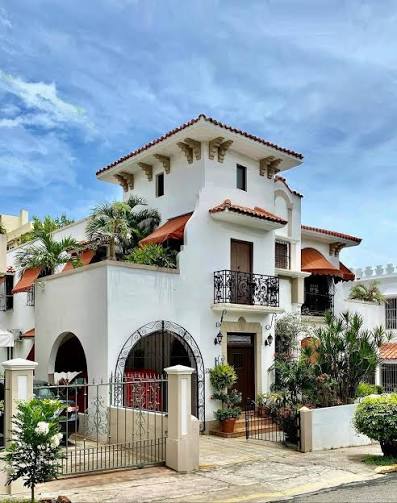
Buying a Historic Home in Miramar: What Buyers Should Know
Miramar · Buyer Guides · Historic Homes · Puerto Rico Real Estate Lizvette Robles September 30, 2026
Miramar · Buyer Guides · Historic Homes · Puerto Rico Real Estate Lizvette Robles September 30, 2026
Historic homes are one of the reasons Miramar stands apart from other luxury residential markets in San Juan. Behind its modern condominium buildings and proximity to the Convention District is a neighborhood shaped by residences dating back to the late 19th and early 20th centuries. Some offer features that are increasingly difficult to reproduce: architectural character, private outdoor space, high ceilings, traditional proportions, distinctive façades, and single-family living in central San Juan.
But buying a historic home is different from buying a modern condominium. The architecture may be part of the opportunity. It can also be part of the due diligence.
For buyers considering a historic property in Miramar, the right question is not simply: “Do I love this house?” It is: “Do I understand what I am buying, and what I will be allowed to do with it?”
Miramar is not simply an older San Juan neighborhood. Puerto Rico formally declared Miramar a Historic Zone of Puerto Rico through Law 3 of March 15, 2005, specifically to protect its architectural and historical integrity and its urban identity. The protected area was later expanded through Law 69 of 2010.
The law describes Miramar's historical development and recognizes the architectural significance of residences and other structures built during the neighborhood's evolution. That designation is part of what preserves Miramar's character. It also means buyers should approach renovation differently from the way they might approach an unrestricted modern property.
A Miramar address alone should not answer this question. Before assuming that a property is subject to a particular historic designation, buyers should verify: the exact parcel, the applicable historic-zone map, the property's classification, and the regulations affecting that specific structure.
Puerto Rico's current statutory description establishes the Miramar Historic Zone generally between the Condado Lagoon/Baldorioty area, Cerra Street and the southern and western boundaries established by law. The statute also recognizes that not every structure within the geographic area is necessarily treated identically. That distinction matters.
Historic neighborhood does not automatically mean identical restrictions for every property. Property-specific verification should happen before a buyer commits to a major renovation strategy.
Buyers sometimes hear: “historic property” and immediately think: restrictions. That is only half the story. Preservation can also help protect the characteristics that made the buyer interested in the neighborhood in the first place.
Miramar's historic-zone legislation was specifically intended to protect its architectural personality and urban character. That can preserve qualities such as: scale, streetscape, architectural identity, and scarcity. A modern condominium can be built elsewhere. An authentic historic Miramar residence cannot simply be recreated anywhere.
This is where buyers need to be careful. Current Puerto Rico regulations governing designated historic sites and zones require permitting for a broad range of work. That can include: structural alterations, façade alterations, additions, reconstruction, repairs, restoration, rehabilitation, fences, demolition, signage, and even exterior painting.
The regulations also provide for the recommendation of the Instituto de Cultura Puertorriqueña (ICP) before applicable permits are issued. For buyers planning significant changes, this should be investigated before closing, not after. “I’ll Just Remodel It” Is Not Enough
Imagine finding a Miramar residence with: the perfect location, beautiful proportions, a large lot, and extraordinary architectural character. But you immediately plan to: replace all exterior windows, change the façade, expand the structure, reconfigure exterior openings, replace architectural details, build an addition, and completely modernize the exterior appearance.
That renovation concept may require considerably more analysis than remodeling the interior of a conventional modern residence. The buyer needs to know: what can be changed, what should be preserved, what requires approval, and what the permitting process may involve. The time to discover that is during due diligence.
When evaluating a historic property, identify what makes the property valuable before deciding what should be removed. Original elements may include: doors, windows, tile, ironwork, woodwork, moldings, balconies, columns, staircases, and façade details.
Not every old element is valuable simply because it is old. But removing important architectural features without understanding them can destroy part of what makes the property distinctive. For buyers planning substantial restoration, an architect experienced with historic properties can be extremely valuable.
Historic-home due diligence should go far beyond finishes. A beautiful house can still have expensive underlying issues. Important systems to evaluate can include: roof, electrical, plumbing, structure, drainage, air conditioning, water systems, windows, storm protection, and moisture intrusion.
In Puerto Rico, climate makes water management particularly important. Heavy rain, humidity, wind and long-term exposure can reveal problems that may not be obvious during a short showing.
With any older Puerto Rico residence, the roof should be part of the inspection conversation. Buyers should understand: its current condition, waterproofing history, previous repairs, drainage, areas of ponding water, and evidence of past leaks. Interior cosmetic repairs can sometimes hide the visual evidence of an older moisture problem. The goal is not simply to ask: “Is it leaking today?” It is to understand: “What is the condition of the entire roof system?”
Older architecture and modern luxury living can create an interesting conflict. Today's buyer may expect: multiple air-conditioning units, large appliances, home automation, EV charging, pool equipment, security systems, and substantial electronic loads. The home's original electrical infrastructure may not have been designed for any of that. Buyers should determine whether electrical systems have been modernized and whether additional upgrades may be necessary for the intended use.
The same principle applies to plumbing. A historic property may have undergone: partial renovation, multiple additions, or repairs at different points in time. That can create a combination of old and newer systems within the same residence. Inspection should therefore focus not only on whether faucets work. The buyer should understand the condition and configuration of the broader system.
A historic home can be cosmetically dated and still represent an excellent opportunity. Conversely, a beautifully staged property can conceal major capital requirements. That is why buyers should separate: cosmetic renovation from building-condition renovation.
Paint, cabinetry and fixtures are one category. Structural work, waterproofing, electrical modernization and major systems are another. The second category can dramatically change the economics of the purchase.
Historic homes often evolve over time. Previous owners may have: enclosed terraces, added rooms, changed windows, modified façades, built auxiliary structures, added bathrooms, or changed the property's use. Those changes should not automatically be assumed to be problematic. But buyers should investigate the property's history and available permitting documentation where relevant. A physical structure and its legal record should tell compatible stories.
For buyers purchasing specifically because they intend to renovate, this may be one of the most important steps. Before closing, try to establish whether the intended project is realistically achievable. That may involve coordination with: an architect, engineer, permit professional, legal counsel, and the relevant Puerto Rico agencies.
Current regulations for historic zones cover not only major construction but also various alterations, restoration work and exterior interventions. Do not build an acquisition strategy around an unverified assumption that: “They'll probably approve it.”
Buyers often focus on the interior. Historic preservation frequently makes the exterior equally important. The current regulatory framework specifically includes façade alterations and exterior painting among work requiring the applicable historic-zone process.
So if your vision includes: changing windows, changing exterior doors, altering balconies, changing façade materials, adding exterior structures, or changing exterior colors and investigate those plans early. A buyer should not assume that ownership creates unlimited freedom to alter the exterior appearance.
Some buyers see an older property primarily as land. That assumption can be particularly dangerous in a historic zone. Puerto Rico's historic-zone regulations specifically address partial and total demolition permits.
If the buyer's investment thesis depends on: “I'll buy it, demolish it and build something new,” that thesis needs regulatory verification before acquisition. The existing structure may be central to the property's legal and historical context.
Historic protection does not necessarily mean nothing new can ever be built. But new construction within a protected urban context may need to respond to applicable planning and preservation requirements. The Miramar Historic Zone law specifically directs planning and conservation efforts toward protecting the area's architectural integrity and residential character.
That means development potential should be evaluated based on actual regulation. Not simply: lot size × what could theoretically fit.
Insurance should be investigated early. Do not assume that because another Miramar property obtained certain coverage, your property will have identical: premiums, limits, deductibles, or conditions. Historic residences can differ substantially in: construction, roof, electrical systems, windows, storm protection, replacement characteristics, and overall condition.
Those differences can affect the insurance conversation. A buyer should obtain property-specific guidance from a qualified insurance professional rather than applying a neighborhood average.
This concept becomes especially important with architecturally distinctive homes. Suppose a buyer purchases a historic residence for a certain market price. That does not necessarily mean the cost of repairing or reproducing: custom millwork, historic details, specialty materials, or architectural elements, will equal the purchase price on a dollar-for-dollar basis. Market value and replacement cost answer different questions. Insurance analysis should recognize that distinction.
A historic façade can be beautiful. The buyer still needs to understand storm protection. Ask: What type of windows exist? Are there shutters? How are openings protected? Were systems added later? Are they permitted where required? How does protection interact with historic architectural elements?
Modern hurricane-resistance expectations and historic preservation may require thoughtful solutions. This is another area where specialized professional guidance can matter.
A listing saying: “Generator included” does not answer enough questions. Determine: generator capacity, fuel type, age, maintenance history, what systems it powers, and how long it can reasonably support the residence under expected loads.
A large historic home may require significantly more power than a smaller property. If the buyer expects whole-house air conditioning during an outage, that should be evaluated specifically.
The same applies to cisterns and water systems. Ask: Is there a cistern? What is its capacity? What areas does it serve? How is it maintained? Does the system operate automatically?
A historic property may have been retrofitted with modern resilience systems. The quality and capacity of those systems can vary substantially.
Parking is easy to underestimate when buyers fall in love with architecture. Miramar is an urban neighborhood. A historic residence with: secure off-street parking may function very differently from a similar property without it.
For a luxury household with: multiple vehicles, guests, staff, or EV charging needs, parking can become a major practical consideration. It should be evaluated as part of the property, not after the purchase.
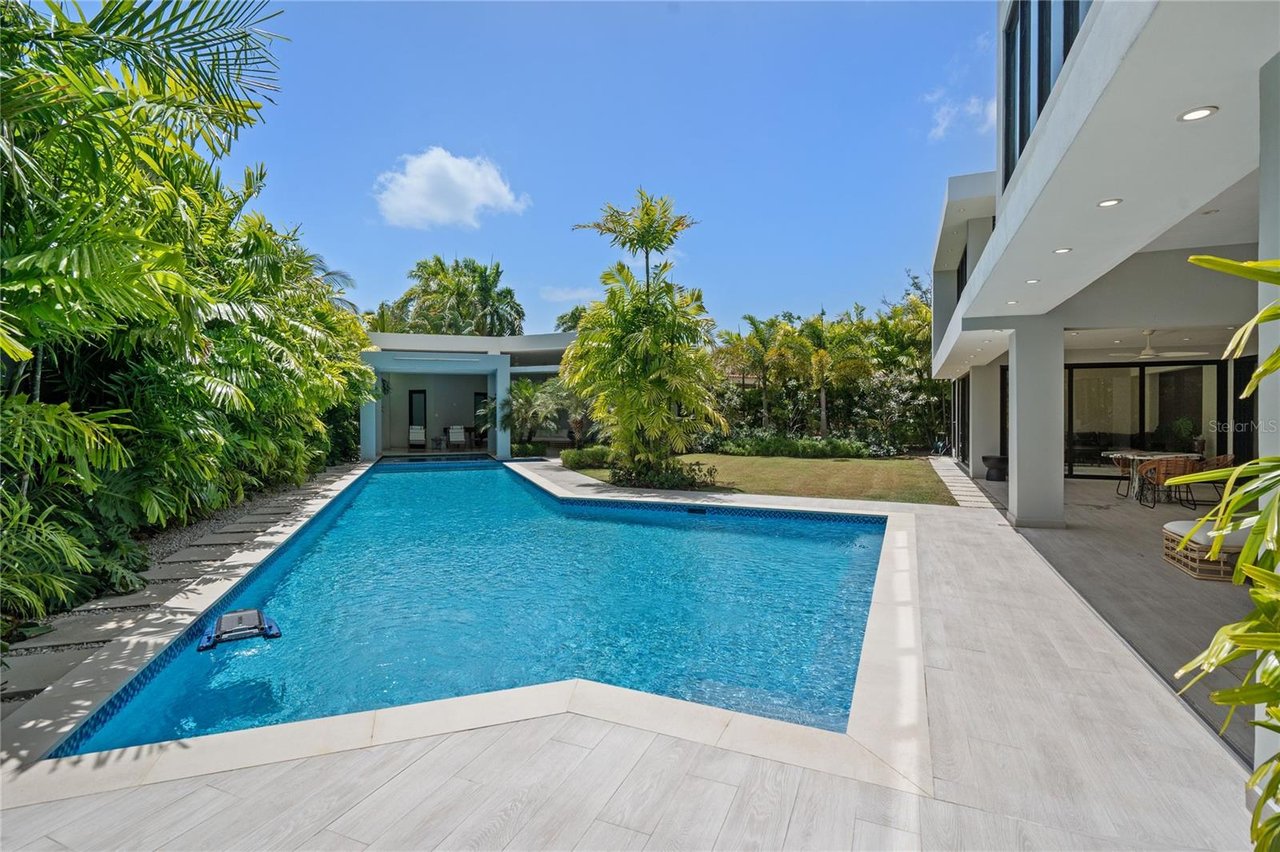
One reason buyers pursue historic Miramar homes rather than condominiums is the possibility of: gardens, courtyards, terraces, private pools, and outdoor entertaining areas. That can be extremely difficult to reproduce in a conventional urban condominium. But again: verify what exists, what is legally documented, and what can be modified.
The outdoor environment can be part of the home's value and part of its regulatory context.
This is critical. Suppose a historic Miramar residence has: 4,000 square feet; and a luxury condominium nearby also has:; and 4,000 square feet. That does not make them comparable. The historic home may include: land, private outdoor areas, exclusive parking, architectural scarcity, private infrastructure, and complete responsibility for maintenance.
The condominium may include: security, elevators, amenities, common insurance, building management, and shared infrastructure. Price per square foot alone cannot capture those differences.
Our analysis of the 2026 Miramar MLS dataset identified closed transactions ranging from: $440,000; to; and $6.65 million. Reported sold price per square foot ranged from approximately: $220/SF; to; and $1,130/SF. That enormous range reinforces a key point: Miramar is not one homogeneous real estate market.
Traditional condominiums, Luxury condominiums, historic homes and New construction. Each can attract a different buyer.
OPUS Miramar is important to the neighborhood. But a new OPUS residence should not automatically determine the value of a historic Miramar home. OPUS offers: new construction, concierge, valet, pool, fitness amenities, multiple parking spaces, and condominium ownership.
A historic residence offers a completely different product. The two may compete for the same buyer in certain situations. But they should not automatically receive the same valuation methodology.
This is where comparable analysis becomes more sophisticated. Imagine a buyer seeking: a substantial single-family residence, architectural character, private outdoor space, central San Juan location, and privacy. That buyer's alternatives may not be limited to Miramar. Depending on budget and priorities, they could evaluate other urban or metropolitan properties. The correct comparable set therefore may extend beyond a neighborhood boundary.
The right comparable isn't necessarily the closest property. It's the property competing for the same buyer.
Two architecturally similar homes can have radically different values if one has undergone a high-quality renovation. But renovation cost does not automatically equal added market value. A buyer should evaluate: quality of work, design, permits, systems modernization, historical sensitivity, and functionality.
A thoughtful renovation can preserve architectural character while solving modern lifestyle needs. A poor renovation can remove the very features that made the home special.
The strongest historic-home renovations often balance two objectives: Preserve what cannot be replaced. And: Modernize what must function for contemporary life. That might mean preserving: façade, proportions, original tile, architectural details, or historic woodwork, while modernizing: electrical, plumbing, air conditioning, kitchen, bathrooms, waterproofing, and resilience systems.
The objective should not necessarily be to make a historic house look new. It may be to make an old house function beautifully today.
Historic-home buyers should build a realistic ownership budget. Potential costs can include: inspection, architectural work, engineering, permits, restoration, electrical upgrades, plumbing upgrades, roof work, windows and storm protection, air conditioning, generator, cistern, landscaping, insurance, and ongoing maintenance. A lower acquisition price does not necessarily mean a lower total investment. That is why renovation planning should begin before the closing.
Renovation projects can uncover conditions that were not visible during initial inspections. Older properties make this possibility particularly relevant. Once walls, ceilings or floors are opened, additional work may become apparent.
A renovation budget with no contingency assumes everything will go exactly as expected. That is rarely a strong planning assumption. Buyers should discuss realistic contingencies with their architect and contractor based on the specific property and proposed scope.
Avoid both extremes. A historic house should not automatically be viewed as: a money pit. And it should not automatically be viewed as: a beautiful house that only needs cosmetic work.
The actual condition determines the answer. A properly maintained and thoughtfully updated historic property may be an exceptional residence. A neglected one may require substantial investment.
Inspection and documentation should decide which one you are buying.
This property type may work particularly well for:
Miramar provides an opportunity that is difficult to find in condominium-dominated Condado.
Someone who values original character may prefer a historic residence to even the newest luxury tower.
Private outdoor space, multiple living areas and residential streets can work particularly well for primary-residence buyers.
Depending on the individual property, larger layouts, outdoor areas and privacy may appeal to families.
For someone who sees renovation as part of the opportunity rather than an inconvenience, Miramar can offer something new construction cannot replicate.
A historic residence may not be ideal for a buyer who prioritizes: minimal maintenance, 24-hour concierge, valet, shared amenities, lock-and-leave ownership, or brand-new building systems. That buyer may be better served by a luxury condominium. In Miramar, that could include new development such as OPUS. In Condado, the buyer could also evaluate new and established luxury towers.
The correct choice depends on lifestyle more than age of construction.
Before purchasing a historic Miramar property, consider reviewing: historic-zone status and property classification, applicable planning and preservation requirements, title and property boundaries, existing permits and renovation history, structural condition, roof and waterproofing, electrical system, plumbing, windows and storm protection, air-conditioning systems, generator, cistern / water storage, drainage, moisture intrusion, insurance availability and estimated cost, parking, pool and accessory structures, proposed renovation feasibility, architectural elements worth preserving, estimated renovation budget, contingency and comparable properties competing for the same buyer.
This is not a substitute for legal, architectural, engineering, insurance or permitting advice. It is a framework for asking better questions before committing capital.
Ask yourself: Am I buying this property because I love what it is, or because I assume I can turn it into something completely different? Which original features do I want to preserve? What major systems have already been modernized?
What major systems still require work? Is my renovation concept permitted? Have previous alterations been documented? What will insurance look like? How will I protect the home during storms?
Does the property have adequate generator and water capacity? Does parking work for my household? What is my realistic all-in investment after renovation? And perhaps most importantly:
That question can prevent an expensive mismatch between buyer and property.
Yes. Puerto Rico declared Miramar a Historic Zone through Law 3 of 2005, and the boundaries were later expanded through Law 69 of 2010.
No. Buyers should verify the exact parcel, structure and applicable classification. The statute itself provides distinctions concerning which structures are included in the historic designation.
Potentially, yes, but applicable permits and historic-zone requirements must be considered. Puerto Rico's regulatory framework requires permits for numerous types of alterations and construction within designated historic areas.
Do not assume you can do so without review. Façade alterations are specifically included among the types of work addressed by the historic-zone permitting rules.
Exterior painting is specifically included in the current permitting requirements for designated historic sites and zones.
Do not base a purchase on that assumption. Partial and total demolition within designated historic areas are specifically subject to the applicable permitting framework.
For permits covered by the historic-zone regulations, the rules provide for recommendation by the ICP before permit issuance.
Not necessarily. Property condition, size, land, architecture, renovation, parking and location can create major differences. The property types should not be compared using a neighborhood average alone.
Insurance is property-specific. Buyers should obtain an assessment based on the actual structure, condition, systems, roof, windows, storm protection and desired coverage rather than assuming all historic homes will receive the same treatment.
There is no universal answer. Architectural scarcity can be valuable, but acquisition price, renovation costs, condition, regulatory constraints and future buyer demand all matter. Historic designation alone does not guarantee appreciation.
Buying a historic home in Miramar can provide something increasingly rare in San Juan: a true house, architectural identity, private outdoor space, central location, and a property that cannot simply be reproduced in a new tower.
But scarcity does not eliminate risk. The buyer needs to understand: the structure, the systems, the legal record, the historic-zone requirements, the renovation plan, the insurance, and the total investment required after closing.
The objective should not be to avoid historic properties because they require more due diligence. It should be to perform enough due diligence to understand whether the property is worth preserving, and whether you are the right owner to do it. With a historic home, you are not only buying square footage. You are buying architecture, land, history and responsibility.
That combination is precisely what can make Miramar exceptional.
At InvEstate Puerto Rico, we help buyers evaluate the complete property, not simply the address, architecture or asking price. For historic Miramar residences, that means helping buyers organize the real-estate side of the analysis around: market evidence, property condition, comparable sales, renovation objectives, ownership considerations, and alternative properties competing for the same buyer.
Specialized legal, architectural, engineering, insurance and permitting professionals should be engaged where appropriate for their respective areas. If you are considering a historic Miramar residence, an established condominium or new construction such as OPUS, the goal is the same: Understand what you are buying before deciding what it is worth.
Related reading: Living in Miramar, Puerto Rico: Real Estate, Historic Homes & Luxury Condos · Miramar Real Estate Market 2026: What the Latest Sales Data Shows · OPUS Miramar: What Buyers Should Know · Condado vs. Miramar: Where Should You Live in San Juan? · Living in Condado, Puerto Rico (2026): Walkability, Healthcare Access & Urban Luxury Lifestyle.
Antonio Cartagena, Broker Lic. C-13471 · Lizvette Robles, Lic. 23765 · (787) 717-6443
Stay up to date on the latest real estate trends.

Act 60, the 1 January 2027 deadline, and the three IRS tests the decree does not cover.

255 sales closed above $1 million between January and October 2026. $597.7 million, and eight of every ten inside five municipalities.
LUXURY CONDO
What 2,524 closed sales show, and the two 2026 rule changes that decide what a bank will finance.

What $1,477,000 buys on Puerto Rico's west coast, how it compares to closed sales above $1 million in Rincon and Boqueron, and what the $142 million Aguadilla airport … Read more

Condado · Buyer Guides · New Developments · Luxury Real Estate
What is still available, how to read the square footage, and what the project does not publish.
LUXURY CONDO
Fannie Mae and Freddie Mac raise the minimum condo reserve requirement to 15%. Puerto Rico law requires 5% - and lets buildings stop contributing altogether.
We connect discerning buyers and sellers with the island’s most exclusive real estate opportunities. Our expertise and network ensure seamless transactions for both relocation under Act 60 and the sale of distinguished estates. We combine discretion, strategy, and global reach to represent your interests with excellence.