
Condado vs. Miramar: Where Should You Live in San Juan?
Condado · Miramar · Relocation · Buyer Guides Lizvette Robles September 26, 2026
Condado · Miramar · Relocation · Buyer Guides Lizvette Robles September 26, 2026
Condado and Miramar are separated by only a short distance. But living in them can feel very different. Both offer an urban San Juan lifestyle. Both provide access to restaurants, professional services and the broader metropolitan area.
Both attract relocation buyers who want to remain close to the city rather than move into a suburban or resort community. But their identities are not interchangeable. Condado is primarily an urban coastal condominium market built around the beach, Ashford Avenue and a highly active mixed residential-hospitality environment.
Miramar is more residential, architecturally varied and historically rooted, with tree-lined streets, historic homes, established condominium buildings and proximity to the Convention District. For relocation buyers, the question therefore should not be: “Which neighborhood is better?” It should be: “Which neighborhood fits the way I actually want to live?”
Consideration | Condado | Miramar |
|---|---|---|
Overall feel | Urban coastal / active | Urban residential / historic |
Beach access | Major advantage | Not primarily beach-centered |
Walkability | Very strong | Strong within neighborhood |
Main corridor | Ashford Avenue | Ponce de León / neighborhood streets |
Housing | Primarily condominiums | Condos + historic homes |
Architecture | High-rise / contemporary / mixed | Historic homes + established apartments + newer development |
Hotels / tourism | Significant presence | Much less dominant |
Nightlife / restaurants | High concentration | More dispersed / neighborhood-oriented |
Waterfront | Atlantic + Condado Lagoon | Lagoon / bay adjacency |
New luxury development | Increasing | More limited but emerging |
Best fit | Beach-city lifestyle | Residential city lifestyle |
Neither column represents a winner. They represent two different versions of urban San Juan.
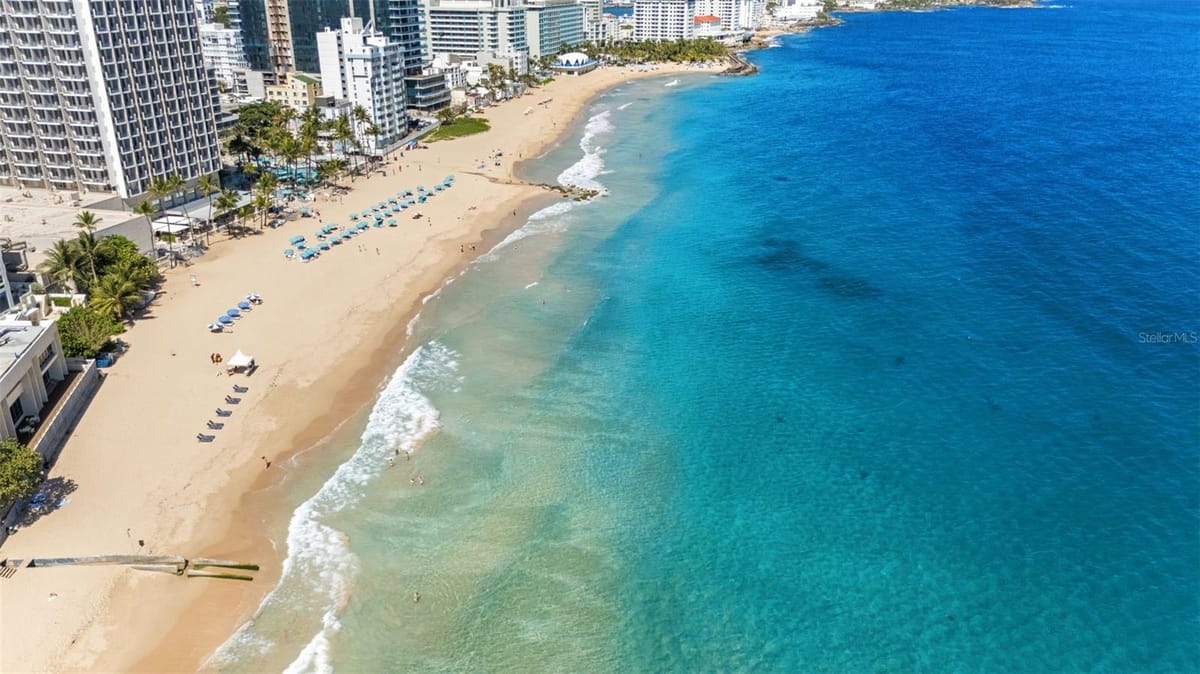
Condado is fundamentally connected to the water. The neighborhood sits between the Atlantic Ocean and Condado Lagoon, with Ashford Avenue running through a dense mix of residences, hotels, restaurants, retail and services. Discover Puerto Rico highlights Condado’s combination of beaches, dining, shopping and nightlife within a walkable area.
That waterfront lifestyle is central to the experience. Miramar is different. It is adjacent to the Condado Lagoon and San Juan Bay, but the neighborhood is not organized primarily around beach access.
Instead, it feels more like a traditional residential city neighborhood. For some buyers, that is precisely the advantage.
Condado tends to feel active. You step outside and immediately encounter: restaurants, hotels, cafés, pedestrians, beaches, fitness options, retail, and visitor activity.
Ashford Avenue functions as the neighborhood’s primary lifestyle corridor. For someone relocating from Manhattan, Miami Beach or another dense urban-coastal market, that combination can feel relatively familiar. Condado allows residents to incorporate the beach into daily life without giving up access to city services.
Miramar generally offers a more residential rhythm. Puerto Rico law formally recognizes Miramar as a historic zone and describes the area between the Condado Lagoon, San Juan Bay and Calle Cerra as having significant architectural and urban identity. Its development includes historic residences dating back to the late 19th and early 20th centuries, particularly around what is now Ponce de León Avenue.
That history still influences the neighborhood today. Buyers can encounter: historic single-family homes, tree-lined residential streets, older apartment buildings, boutique condominiums, and newer residential projects.
Miramar often appeals to buyers who want to remain very close to Condado while living in an environment that feels somewhat less centered on hotels and tourism.
This is not simply marketing language. Puerto Rico enacted Law 3 of March 15, 2005 specifically to declare Miramar a historic zone and protect its architectural, historical and urban integrity. Planning regulations for the historic zone also recognize the importance of preservation and restoration within the district.
For buyers, that has practical significance. Historic character can create: scarcity, architectural identity, and properties that are difficult to reproduce.
But historic property can also involve additional considerations. Renovating or altering a protected property may require a different level of planning and regulatory review than remodeling a conventional condominium. A buyer attracted to Miramar specifically because of its architecture should understand both sides of that equation.
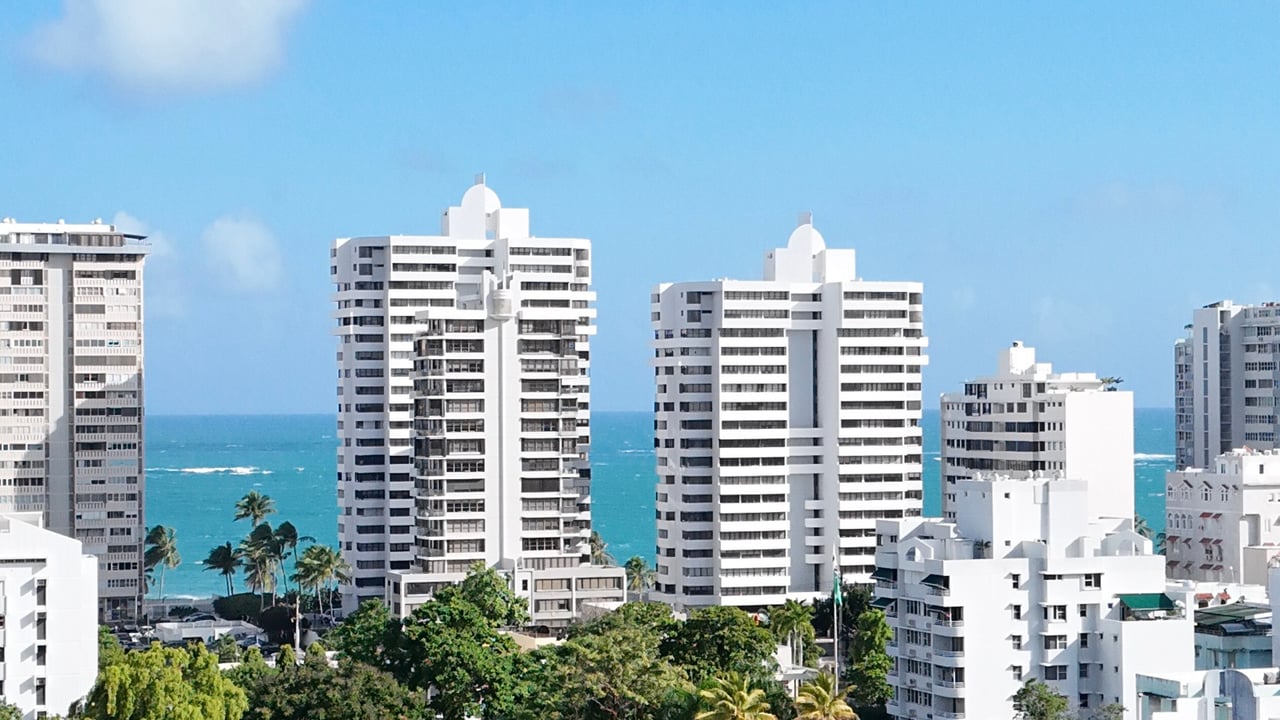
Condado’s real estate identity is heavily vertical. Buyers commonly encounter: oceanfront condominiums, lagoon-facing residences, traditional apartment buildings, renovated luxury units, penthouses, and new luxury developments.
That creates a particularly strong market for buyers who want: security, parking, generator systems, building management, amenities, and lock-and-leave ownership.
For many relocation and second-home buyers, that simplicity is a major advantage.
Miramar’s inventory is more architecturally diverse. The neighborhood combines historic houses with multifamily residential buildings and newer condominium inventory. Current market guides describe Miramar’s housing stock as a combination of historic homes, established condos and newer development, rather than a market dominated almost entirely by high-rise luxury apartments.
That can appeal to buyers who say: “I want San Juan, but I do not necessarily want a tower on Ashford Avenue.” A buyer may be able to consider: a traditional condo, a larger apartment, a historic residence, or newer construction and within the same general neighborhood.
Both can support a walkable lifestyle. But they are walkable in different ways.
Condado concentrates a large number of restaurants, shops, hotels and services along Ashford Avenue and surrounding streets. The beach and lagoon are also integrated directly into the neighborhood. For someone who wants to leave the apartment and immediately have multiple lifestyle options, Condado has a major advantage.
Miramar is also compact and walkable, with cafés, restaurants and cultural destinations distributed around Ponce de León and its residential streets. Current neighborhood guides also emphasize its connection to the Convention District and nearby Condado. But the overall experience tends to feel more residential.
So the better question is not: “Can I walk?” It is: “What do I want to walk to?”
This is one comparison where the distinction is relatively straightforward. If your ideal routine includes: walking directly to the beach, morning ocean swims, beachfront walks, or seeing the Atlantic from your residence.
Condado offers far more direct options. Discover Puerto Rico identifies Condado Beach and Condado Lagoon as defining elements of the neighborhood and highlights their accessibility within the district. Miramar has proximity to the lagoon and waterfront areas, but it is not primarily a beach neighborhood.
For some buyers, this difference alone decides the search.
Not every relocation buyer wants to step outside into the middle of an active hotel and restaurant corridor. Some buyers want: trees, residential streets, architectural character, less visitor activity, and a stronger sense of neighborhood.
That buyer may prefer Miramar. The neighborhood’s protected historic character and mix of traditional homes and residential buildings create a different environment from Condado’s more intensive beachfront development.
Condado contains some of Puerto Rico’s best-known hotels and resorts. That contributes to: restaurants, services, nightlife, activity, and international visibility.
It also means portions of Condado can feel busy. Visitors are part of the neighborhood environment. That is not necessarily negative. For some residents, it creates exactly the energy they want.
Miramar generally has less of that resort/hotel concentration. A full-time resident who prefers a calmer urban environment may value that difference.
Our analysis of 60 Condado closed sales in the 2026 MLS market snapshot found: $73.9 million in closed volume; $925,000 median closed price; approximately $630/SF median sold price; 43% of transactions at $1 million or more; and 67% cash purchases.
But those neighborhood-wide numbers do not describe every Condado property. New construction such as Vanderbilt Residences and The ICON occupies a different segment from much of the traditional resale market. Oceanfront and lagoon-side properties can also behave differently.
Condado is increasingly a collection of submarkets within one neighborhood.
This is important. A common mistake is approaching Miramar as though it were simply: “Condado, but cheaper.” That misses the nature of the neighborhood. Miramar has: different architecture, different housing inventory, different development constraints, different street environments, and a protected historic identity.
Its value should be analyzed within its own competitive market. A historic Miramar residence should not automatically be valued against an oceanfront Condado condo merely because the neighborhoods are close. The buyers may not even be seeking the same product.
This is the principle we use throughout our Condado analysis: The right comparable isn't necessarily the closest property. It's the property competing for the same buyer. That becomes particularly important when comparing Miramar with Condado.
Suppose a buyer wants: 2,500+ square feet; historic character; quiet residential streets; walkability; and proximity to San Juan business activity.
A Miramar property may compete against another Miramar residence more directly than against a Condado oceanfront tower located a few minutes away. Now change the requirements to: direct Atlantic views, 24-hour concierge, pool, high-floor condominium, and beach access.
Suddenly, Condado becomes the more relevant market.
Condado currently has prominent new luxury developments such as: Vanderbilt Residences and The ICON. These developments are creating a modern luxury category defined by contemporary construction, amenities and multimillion-dollar pricing. Miramar’s real estate story is still more heavily connected to established inventory and historic architecture, although newer projects are adding contemporary options.
That difference may matter greatly to a buyer who specifically wants a newly delivered residence.
Miramar is also beginning to see contemporary development alongside its established architectural identity. Projects such as OPUS Miramar are relevant because they create a different buyer proposition: new construction within a neighborhood historically dominated by older residences and buildings. That deserves its own analysis rather than being treated as a footnote to Condado.
Condado buyers can compare: direct oceanfront, ocean view, lagoon-side, lagoon view, and interior urban exposures.
That gives the buyer substantial variation within a relatively small area. Miramar also has properties with lagoon, bay or city views, but waterfront living is not the dominant organizing principle of the neighborhood. If the water is the primary reason you are moving to Puerto Rico, that difference matters.
For some buyers, architectural identity is more important than a panoramic view. Miramar’s historic inventory includes examples from multiple architectural periods, and preservation studies have documented a broad range of early- and mid-20th-century residential architecture within the neighborhood. That can create properties with: distinct façades, original architectural details, gardens, larger residential lots, and layouts very different from contemporary condominium towers.
Buyers seeking that character are shopping for something Condado may not reproduce easily.
Beautiful historic architecture can involve: maintenance, restoration, older building systems, and potential regulatory considerations.
A buyer should evaluate: the structure, electrical systems, plumbing, roof, windows, storm protection, insurance, and renovation permissions and before assuming the property is simply a more charming alternative.
The architectural value is real. So is the due diligence.
A relocation buyer who travels frequently may prioritize simplicity. A modern condominium can provide: security, building management, common maintenance, generator infrastructure, parking, and concierge services.
That can make Condado particularly attractive for: second-home owners, executives, frequent travelers, and buyers splitting time between Puerto Rico and another location.
A historic home in Miramar can provide an extraordinary lifestyle. But ownership responsibilities may be very different from handing the keys to a condominium building when you leave the island.
This distinction comes up frequently with full-time relocation. Some buyers initially assume that because they are moving to Puerto Rico they should live as close to a resort lifestyle as possible. After spending time in San Juan, their priorities change.
They realize they want: a real neighborhood, restaurants nearby, city access, architectural character, and a home that feels residential rather than vacation-oriented.
Miramar can fit that buyer exceptionally well.
Families should compare much more than the apartment. Daily life may include: school routes, extracurricular activities, parking, grocery shopping, medical care, work commutes, and weekend recreation.
Condado’s walkability and proximity to several schools and services may be attractive. Miramar’s quieter residential character may also appeal strongly. There is no universal family winner.
The right neighborhood depends on the family's routine.
Miramar’s position can be particularly practical for buyers moving between: San Juan, the Convention District, Santurce, Hato Rey, and Old San Juan.
Condado is also centrally positioned but has a different traffic and street environment. A buyer who expects to commute regularly should test the route during actual working hours rather than relying only on the map. A five-mile trip in metropolitan San Juan does not always behave like a five-mile trip elsewhere.
Miramar sits adjacent to the Puerto Rico Convention Center district and remains closely connected to Distrito T-Mobile and the surrounding commercial and entertainment development. Current neighborhood guides identify this proximity as one of Miramar’s significant locational advantages. For buyers whose: business, events, professional activity, or entertainment.
regularly brings them to that part of San Juan, Miramar can be especially convenient. That is a lifestyle feature Condado does not replicate in quite the same way.
This is less clear-cut than it once might have been. Condado has a higher concentration of restaurants, hotel dining and nightlife within a compact visitor-oriented corridor. Miramar has its own restaurant and café ecosystem, but it is more integrated into a residential neighborhood environment.
The better fit depends on what you want. If you want to walk outside and have a large number of options within a few blocks: Condado. If you prefer neighborhood restaurants and cafés within a quieter residential grid: Miramar may appeal more.
Condado is the stronger choice if nightlife is a significant priority. Its hotels, bars, restaurants and visitor activity produce a more active evening environment. For some residents: that is a feature.
For others: that is a drawback. Miramar generally provides access to San Juan nightlife without placing the residence directly in the center of it. This is exactly why buyers need to visit both neighborhoods after dark.
Both neighborhoods can appeal to buyers relocating to Puerto Rico under Act 60. But again: Act 60 does not determine the neighborhood. The tax structure should be evaluated with tax and legal professionals.
The real estate decision should determine where the buyer actually wants to live. An Act 60 buyer seeking: high-rise living, beach access and a lock-and-leave property; and may prefer Condado.
A buyer seeking: historic character, a quieter residential setting and central San Juan access may prefer Miramar. The tax motivation may bring the buyer to Puerto Rico. It should not dictate the wrong lifestyle once they arrive.
For a primary residence, Miramar can become particularly competitive. Why? Because full-time buyers often begin placing more weight on: street environment, privacy, space, storage, noise, parking, and daily routine.
The beach may still matter. But it may not need to be outside the front door every morning. For that buyer, Miramar’s residential character can become increasingly attractive.
Second-home buyers may weight things differently. They may want: beach access, views, security, concierge, amenities, and easy lock-and-leave ownership.
Condado has a deep supply of properties designed around exactly that lifestyle. That does not eliminate Miramar. But it may tilt the decision toward Condado for buyers whose Puerto Rico residence is primarily used seasonally.
Miramar. This is one of the clearest distinctions. Condado is overwhelmingly associated with condominium living. Miramar provides opportunities to purchase detached historic residences in addition to apartments and condominiums.
Those homes are relatively scarce, and inventory can be limited. But a buyer who says: “I want to live in the city, but I do not want to live in a condo” should strongly consider Miramar.
Condado currently offers a broader and more visible luxury condominium market. That includes established oceanfront properties as well as new development. Our 2026 Condado market analysis shows a wide spectrum of transactions, with the upper portion of the market accounting for a disproportionate share of closed volume.
That depth gives buyers more condominium choices across different buildings, waterfront positions and price points.
A Condado condominium buyer may have: HOA, master insurance, individual insurance, CRIM taxes, assessments, parking, and utilities.
A Miramar condominium buyer may have a similar structure. But a Miramar single-family or historic homeowner may face an entirely different ownership profile involving: roof, exterior maintenance, landscaping, private building systems, storm preparation, and potential restoration.
Purchase price alone does not tell you which option is less expensive to own.
This is an easy mistake. A buyer may see a $1,000 monthly condominium fee and think: “That is expensive. A house has no HOA.” But a house has expenses that may simply arrive differently.
Roof repairs, exterior paint, landscaping, insurance, generator maintenance, pest control, water systems and security.
A condominium bundles certain building expenses into common charges. A home places more of those responsibilities directly on the owner. The comparison should be: total ownership cost vs. total ownership cost.
Not: HOA vs. no HOA.
Condado buyers can purchase an older apartment and renovate it. But the renovation is generally confined largely to the residence itself, subject to building and legal requirements. A historic Miramar property may involve a much more extensive project.
Architecture, structure, exterior appearance and preservation considerations can all become relevant. For a buyer who loves restoration: that may be the opportunity. For someone who wants turnkey ownership: it may be the wrong fit.
There is no universal answer. Condado has strong recognition among: relocation buyers, second-home buyers, luxury condo buyers, and buyers specifically seeking beach access.
Miramar has scarcity created by: historic architecture, limited detached-home inventory, central location, and a distinctive neighborhood identity.
Future value depends on the individual property. An average unit in an average building should not automatically outperform an exceptional Miramar property merely because the address says Condado. And vice versa.
When choosing between the two neighborhoods, compare the actual properties on factors including view, floor, condition, square footage, parking, outdoor space, ownership costs, building quality, renovation requirements, insurance, generator systems, daily commute, walkability, beach access and future resale competition. Then compare lifestyle. Ask: Where would I rather spend a normal week?
That answer may be more useful than asking which neighborhood has the more prestigious name.
For relocation buyers, this is especially important. Do not simply tour three Condado apartments and one Miramar property. Walk both neighborhoods. Have coffee there.
Drive the school route. Go at night. Visit on a weekday. Observe parking. Listen to the street.
Walk to where you would eat dinner. Imagine carrying groceries home. Real estate is experienced outside the apartment too. A property can be perfect while the neighborhood is wrong.
Condado may be the stronger fit if you prioritize: the beach as part of daily life, high-rise condominium living, strong walkability, restaurants and nightlife, water views, hotel and concierge infrastructure, new luxury development, lock-and-leave convenience, and a highly active urban environment.
Miramar may be the stronger fit if you prioritize: a more residential urban setting, historic architecture and tree-lined streets, the possibility of a house rather than only a condo proximity to the Convention District city access without living directly in a major hotel corridor and a neighborhood identity rooted more in architecture and residential life than beach tourism.
It can be for certain properties, but Miramar should not be treated simply as a less expensive substitute for Condado. Housing types, architecture, size and property characteristics differ significantly between the neighborhoods.
Yes, many parts of Miramar support a walkable urban lifestyle, particularly around Ponce de León and the central residential grid. Condado generally has a denser concentration of beach, retail, hotel and restaurant uses.
Yes. Puerto Rico formally declared Miramar a historic zone in 2005 to protect its architectural and urban character.
Condado. Beach access is one of Condado’s defining advantages.
Detached homes are not the dominant Condado product. Buyers specifically seeking urban single-family or historic homes will generally find Miramar more relevant.
Yes. Miramar includes established apartment buildings, condominiums and newer residential development in addition to historic homes.
Condado generally has a more concentrated nightlife, restaurant and hotel environment.
Miramar will often feel more residential, although the experience varies by exact street and building.
Either can work extremely well. Miramar may appeal more to buyers prioritizing residential character, while Condado may appeal more to those prioritizing beach access and an active walkable environment.
Condado's condominium inventory, building services and proximity to the beach may appeal particularly to second-home buyers, but the best choice still depends on the individual property.
Condado and Miramar are close enough that buyers often consider them together. But they should not be treated as substitutes. Condado offers: beach + condominium + energy + walkability.
Miramar offers: architecture + neighborhood + urban access + residential character. Neither is automatically more luxurious. Neither is automatically a better investment.
And neither should be selected simply because one property appears less expensive than the other. The right choice depends on what the buyer values after the closing. Because ultimately, you are not choosing between two ZIP codes.
You are choosing between two ways of living in San Juan. Condado puts the coast at the center of the lifestyle. Miramar puts the neighborhood at the center of the lifestyle.
At InvEstate Puerto Rico, we help relocation and luxury buyers compare San Juan properties based on the complete ownership experience, not simply the listing price or neighborhood name. That means evaluating the residence, comparable sales, building, ownership costs, location, lifestyle and alternative properties before making a decision. If you are considering Condado, Miramar or both, we can help you determine which market, and which property within that market, actually fits the way you plan to live in Puerto Rico.
Related reading: Relocating to Condado, Puerto Rico: A Buyer’s Guide · Living in Condado, Puerto Rico (2026): Walkability, Healthcare Access & Urban Luxury Lifestyle · Oceanfront vs. Lagoon-Side Condado: Which Is Right for You? · What Does It Cost to Own a Condo in Condado? · OPUS Miramar: What Buyers Should Know.
Antonio Cartagena, Broker Lic. C-13471 · Lizvette Robles, Lic. 23765 · (787) 717-6443
Stay up to date on the latest real estate trends.

Act 60, the 1 January 2027 deadline, and the three IRS tests the decree does not cover.

255 sales closed above $1 million between January and October 2026. $597.7 million, and eight of every ten inside five municipalities.
LUXURY CONDO
What 2,524 closed sales show, and the two 2026 rule changes that decide what a bank will finance.
What $1,477,000 buys on Puerto Rico's west coast, how it compares to closed sales above $1 million in Rincon and Boqueron, and what the $142 million Aguadilla airport … Read more

Condado · Buyer Guides · New Developments · Luxury Real Estate
What is still available, how to read the square footage, and what the project does not publish.
LUXURY CONDO
Fannie Mae and Freddie Mac raise the minimum condo reserve requirement to 15%. Puerto Rico law requires 5% - and lets buildings stop contributing altogether.
We connect discerning buyers and sellers with the island’s most exclusive real estate opportunities. Our expertise and network ensure seamless transactions for both relocation under Act 60 and the sale of distinguished estates. We combine discretion, strategy, and global reach to represent your interests with excellence.