BUYING REAL ESTATE IN PUERTO RICO
Forty closed sales in Dorado ranged from $136 to $3,110 per square foot. Same town. That gap is the entire reason this guide exists.
Puerto Rico is not one market, and neither is any single town in it.
In Dorado, we tracked 40 closed Stellar MLS sales across eight distinct communities between 2025 and 2026. The range was $136 to $3,110 per square foot — a twenty-three-fold spread inside one municipality. In Guaynabo, The Legacy brought 44 residences from $1.2M to market at $818 per square foot, the first new construction in Garden Hills–San Patricio in 25 years. In Condado, two oceanfront residences priced identically at $2 million can carry maintenance figures that differ by more than $1,200 a month.
A price per square foot means nothing until you know which of those eight markets it came from.
Most buyers arrive having read national coverage about "Puerto Rico." What they need is the closed-sale record for the four buildings they are actually choosing between.
Dorado condos: eight markets in one town · What it costs to own a condo in Condado · Neighborhoods
If any part of your move is tied to Act 60, the calendar now matters more than the property.
House Bill 505, approved in February 2026, extended Puerto Rico's Individual Resident Investor program through 2055. It also changed the terms. Decree applications filed on or before December 31, 2026 keep the 0% Puerto Rico rate on dividends, interest and post-relocation capital gains. Applications filed from January 1, 2027 onward move to 4%. Existing decree holders are unaffected. Post-2026 applicants will also need to show six years of prior non-residency and produce Property Registry documentation for their principal residence.
Three things follow from this that change how you buy.
An Individual Resident Investor must acquire Puerto Rico real estate as a primary residence within two years of receiving the decree.
The property must remain your primary residence for the life of the decree. Buyers who plan to offset carrying costs with short-term rental income are describing a different property than the one their decree requires.
Your principal residence has to appear in the Property Registry — which, in Puerto Rico, is a separate event from closing.
This is a tax matter, and we are not your tax advisor. But we are the people who have to find the property inside the window, and two years moves faster than it sounds in a market where inventory above $2M in a specific building may turn over twice a year.
Act 60 and real estate · The 183-day rule and bona fide residency · Buying through an LLC
This is where mainland buyers lose money, and it is almost never on price.
Puerto Rico is a civil-law jurisdiction. Ownership is not perfected when you sign — it is perfected when the deed is inscribed in the Property Registry. The Registry independently reviews documents for legal sufficiency, and errors in the chain delay or prevent inscription.
In Puerto Rico only a licensed attorney can be a notary. The notary prepares the deed, verifies the legality of the transfer and gives public faith as to its contents.
At this price point it is common practice to retain your own buyer-side attorney, separate from the notary, for contract and title-risk review before you commit to a closing date. Nobody in the room is obligated to be your advocate unless you put them there.
For deeds valued between $10,001 and $5,000,000, the Notarial Act sets the fee by agreement between the parties and the notary, but never more than 1% and never less than 0.50% of the value. On a $2.5M purchase that is a legally bounded range of roughly $12,500 to $25,000 — a difference most buyers never learn is theirs to discuss.
It does not correct registry inconsistencies and it does not accelerate inscription. Budget $2,000 to $8,000 for title search and coverage planning, and treat it as protection, not as a solution to a defective chain.
In luxury that distinction is expensive, because these properties trade far above their CRIM figures.
Property tax records are frequently outdated and discrepancies surface late. We request CRIM status verification early, because unpaid property tax follows the property.
And your property tax bill will surprise you — in your favour. CRIM assesses property on its 1957–58 value, not on what you are about to pay, so the taxable base bears almost no relationship to a luxury purchase price. The primary-residence exemption (exoneración) covers $15,000 of that assessed value, and you have to apply for it. What this does not do is protect you from the previous owner's arrears: CRIM debt follows the property, which is why we verify status before you sign, not after.
The Property Registry: the risk buyers underestimate most · Closing costs when buying in Puerto Rico · Title, registry and legal risk · Due diligence checklist 2026
Vertical, oceanfront, building-driven. The building's reserves, its master insurance policy and its assessment history will affect your ownership more than the unit's finishes. Oceanfront and lagoon-side are two different markets on one avenue.
Resort-governed, and eight submarkets deep. Across 40 closed sales in 2025–2026 the range ran from $136 to $3,110 per square foot. Club membership, resort fees and which community you are in drive value as much as the house does.
Gated, low-density, St. Regis-anchored. Inventory is small enough that a single closed sale resets the comparable set for everyone else.
More inventory, a wider range and the widest gap on the island between asking prices and what actually closes. This is the market where a buyer who knows the closed record has the most leverage.
The market for families who are staying. Schools, commute and new construction — scarce for 25 years until The Legacy opened 44 residences from $1.2M at $818 per square foot — drive the decision here, not ocean frontage.
Lower price per square foot, longer marketing times and far thinner comparables. A $1M+ purchase in Rincón is underwritten differently from a $1M+ purchase in Condado: fewer recent sales to price against, a smaller buyer pool on resale, and surf-season swings that do not exist in San Juan. They are two different exercises, and we price them as such.
The purchase price is the number you negotiate once. This is the number you live with.
Maintenance fees are not proportional to price. In Condado, current listings show monthly condominium fees from approximately $193 at La Rada to approximately $1,558 at 888 Ashford, where the fee includes insurance, reserves, security, water and maintenance. Parking is sometimes billed separately. Two $2 million residences can differ by over $14,000 a year before a single repair.
Windstorm coverage is the single biggest factor in your insurance premium, and in luxury it is the line that moves most. The condominium master policy covers the building structure, not the interior of your unit — buyers routinely assume otherwise and discover it after a storm.
Special assessments are the cost nobody quotes you. Ask for the building's assessment history and reserve study, not just its current fee. And ask what backs the property when the grid goes down: generator capacity, solar, battery, water storage, and who maintains it. The answer varies enormously between two buildings on the same street.
Oceanfront: risk, insurance and long-term value · Home insurance for luxury properties · What insurance actually covers
Most $1M+ purchases here close in cash, and the closed record shows it — in Dorado, thirty-three of fifty-seven sales paid cash; in Condado, forty of sixty. That is not a rule, it is a negotiating reality: a financed offer competes against cash on timeline, not only on price.
Financing from the mainland on a Puerto Rico property is a different conversation than a mainland mortgage, and it is the part relocating buyers most often discover late. We are brokers, not lenders — but we will tell you early where a financed offer will and will not compete, and put you in front of people who actually lend here.
“His guidance, professionalism, and expertise — not only in real estate transactions but also in banking and financing options — were truly exceptional.”
— Jonathan V.
“Is it safe?” It is not a yes-or-no question. The honest answer is area by area, and street by street within areas. An honest area-by-area answer
"Where do people like me actually live?" The honest answer is six places, and they have very little in common. Why billionaires are moving to Puerto Rico
"What about schools?" The question that decides more relocations than any tax rate. Private schools in Puerto Rico
"Should I buy, or build?" Sometimes building wins. Often the timeline does not survive the two-year decree window. What it costs to build in 2026
"Should I hold it in an LLC?" It affects your Act 60 compliance, not only your liability. Buying through an LLC
"Is it in a flood zone?" Check before you make the offer, not during due diligence. It changes the insurance, the financing and the resale. How to check before you buy
Finding the property is the part you can do yourself. Everything after it is why we are here. We evaluate the property inside its actual market — the closed sales in that building, the assessment history, the maintenance reality, the registry chain — and we negotiate from that position. We coordinate inspections, due diligence, appraisal and financing, title work and closing, alongside your own attorney, inspector, lender, insurance professional and CPA.
We quote a lot of market data on this page, so here is ours. 12 closings, $10.7 million, four of them above $1M, from Condado and Río Grande to Ponce, Cabo Rojo and Rincón. Every one is open on this site, and eleven carry our name on the MLS as the listing brokerage.
We have also closed on the west coast and the south — Rincón, Cabo Rojo and Guánica — which is why we can price those markets from experience rather than from a portal.
On the buy side, where our name never appears on a listing: we represented the buyer in Paseo Real, Dorado (2025). And for a downsizing client we handled both ends of the same move — we listed and sold their family home in Los Prados, Caguas for $520,000, then represented them buying their apartment at Murano, Guaynabo.
All twelve we listed ourselves, which matters more to you than it sounds: when we tell you what a seller will actually accept, we are telling you from the other side of that table. And we have no interest in pointing you toward a listing of our own — so when we tell you a building is overpriced, we have nothing riding on the answer.
Boutique by design. We keep a deliberately small book of listings, because every client works directly with the two of us — from the first showing to the closing table. Fewer clients at a time, our full attention on each. That is the service we sell, and it is the reason this list is curated rather than long.
“If you are considering relocating to Puerto Rico or exploring Act 60 opportunities, I highly recommend InvEstate Puerto Rico. Lizvette and Antonio provided valuable guidance beyond real estate and helped us understand the market, lifestyle, and buying process in Puerto Rico. If you are looking for a realtor in Puerto Rico who understands both local and relocation buyers, they are an excellent choice.”
— German Soto, relocated to Puerto Rico, 2025
“We just closed on our beautiful condo in Río Mar, and it was an excellent experience working with Antonio Cartagena and Lizvette Robles. They responded quickly to all our questions with patience, professionalism, and honesty. We highly recommend them and would gladly work with them again.”
— M. Rappa, buyer, Río Mar
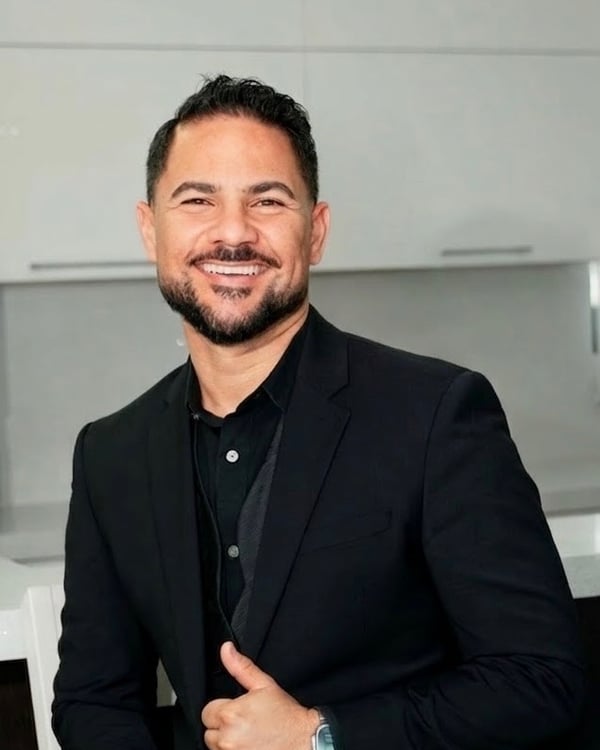
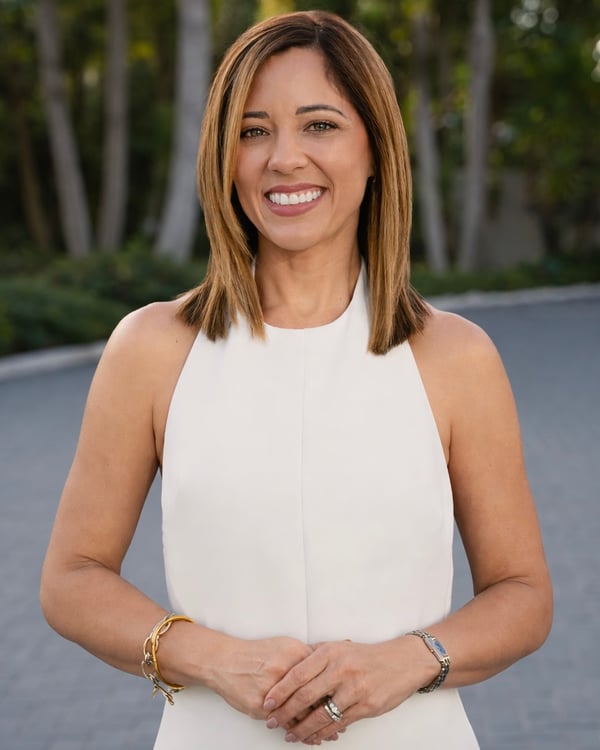
Antonio Cartagena, Broker Lic. C-13471 · Lizvette Robles, Broker Lic. C-23765. Twenty years in Puerto Rico's luxury market.
You don't need someone to open doors. You need representation that understands what the Registry does after you walk through them.
Tell us the two or three buildings or communities you are choosing between. We will send you what actually closed in them.