
What Does It Cost to Own a Condo in Condado?
Condado · Buyer Guides · Puerto Rico Real Estate · Luxury Real Estate Lizvette Robles September 21, 2026
Condado · Buyer Guides · Puerto Rico Real Estate · Luxury Real Estate Lizvette Robles September 21, 2026
The purchase price is only the beginning. When buyers evaluate a condominium in Condado, the conversation often starts with: “How much is the apartment?” But the more useful question is: “What will this property actually cost me to own?”
Two Condado residences with similar purchase prices can have very different monthly and annual carrying costs. One building may have relatively simple common areas and limited staffing. Another may include 24-hour security, concierge services, pools, fitness facilities, generators, extensive common areas and a much larger operating budget.
That is why buyers should evaluate the total cost of ownership, not simply the acquisition price. For most Condado condominiums, that means understanding: HOA fees, master insurance, individual insurance, property taxes, special assessments, utilities, parking, reserves and ongoing maintenance.
Condado is not one uniform condominium market. Current listings illustrate how dramatically monthly condominium fees can vary by building and residence.
For example, a current listing at La Rada, 1020 Ashford Avenue, reports a monthly HOA of approximately $193. A one-bedroom residence at Mirador del Condado, 1035 Ashford Avenue, reports approximately $314 per month. At the other end of the spectrum, a residence at 888 Ashford Avenue reports monthly condominium fees of approximately $1,558, with services including insurance, reserves, security, water and maintenance.
The lesson is not that one building is inexpensive and another is expensive. The lesson is: You need to understand what the fee pays for.
The answer depends on the condominium. A monthly fee may contribute toward common expenses such as building maintenance, elevators, common-area electricity, water, security, staff, landscaping, pools, generators, insurance and reserves. But buyers should never assume that every building includes the same items.
A current listing at 888 Ashford, for example, states that its monthly condominium fee includes 24-hour guard service, reserves, insurance, structural and grounds maintenance, security, trash and water. Other Condado listings show much lower HOA figures with more limited services. That means comparing HOA fees solely by dollar amount can be misleading.
A better comparison is: HOA cost + services received + financial condition of the association.
Buyers naturally like lower monthly expenses. But an unusually low condominium fee deserves analysis rather than automatic celebration. Ask: Is the building adequately funding maintenance? Does it maintain reserves? Are major capital projects approaching? Has the building historically relied on special assessments? Is insurance fully reflected in the budget?
A building can keep monthly fees low by postponing expenses. Eventually, those expenses may still need to be paid. That is one reason reviewing the condominium’s financial records can be more important than simply knowing the current monthly fee.
New developments require another layer of analysis. The projected HOA at a new building is based on an operating budget created before the condominium has years of actual operating history. That makes the word projected important.
At projects such as Vanderbilt Residences or The ICON, buyers should review the proposed budget and determine which services are included before evaluating the monthly number. A building with concierge, valet, multiple amenity areas, significant landscaping and extensive common facilities naturally has a different cost structure from a simpler condominium. The issue is not whether the HOA is “high.”
It is whether the services and operating structure make sense for the buyer.
Insurance deserves particular attention in Puerto Rico. Under Puerto Rico condominium law, the Council of Owners may obtain insurance covering common elements and certain other portions of the property. Owners are required to pay their proportional share of a master policy adopted by the condominium even if they also maintain private insurance for their individual unit.
This distinction is important. The condominium may have a master policy. The individual owner may still need separate coverage. These are not necessarily duplicates.
A condominium master policy generally relates to the condominium association and the portions of the property covered under that policy. An individual owner may separately insure personal property and private elements of the apartment that are not adequately covered by the master policy. Puerto Rico law specifically preserves an owner’s right to obtain individual insurance and gives owners the right to examine documentation related to the condominium’s master policy.
Before purchasing, buyers should therefore ask for: the master policy, coverage limits, deductibles, exclusions and evidence of current coverage. They should then review their individual insurance needs with a qualified insurance professional.
A buyer should not stop after hearing: “The building is insured.” The next question should be: “Under what terms?” Policy deductibles can materially affect owners after a major loss.
Buyers should understand how the condominium documents and insurance structure handle deductibles and whether owners could become responsible for a portion of an uncovered loss or deductible. This is especially important in a hurricane-prone jurisdiction. The presence of insurance alone does not tell you the potential financial exposure.
Puerto Rico real property taxes are administered through the Centro de Recaudación de Ingresos Municipales, or CRIM. CRIM’s public cadastral system includes assessed values, exemptions or exonerations and the amount of value subject to taxation for individual parcels. For buyers, the important point is that property-tax treatment is property-specific and owner-specific.
Do not estimate the buyer’s future CRIM liability solely from what the current owner pays. A buyer should verify the property’s CRIM record, current balance, assessed value and any exemption or exoneration reflected in the account.
This is particularly important when the seller has an exemption or other tax treatment that may not apply to the buyer. During due diligence, buyers should verify: the cadastral number, current CRIM balance, assessed value, exemptions or exonerations, and whether the current tax treatment is expected to continue after the transfer.
The CRIM cadastral system is a useful starting point, but the buyer’s actual tax position should be confirmed for the specific transaction.
A condominium can impose expenses beyond the regular monthly HOA. These are commonly referred to as special assessments. They may be used for significant projects or unexpected building expenses that cannot be fully funded from existing operating accounts or reserves.
Examples could include major structural work, waterproofing, façade repairs, elevator modernization, roof work, generator improvements or other capital projects. The exact reason varies by building. For a buyer, the key questions are: Are there any current assessments? Have any been approved but not yet billed? Are major projects under discussion? Who is responsible for paying an assessment after the sale?
Those questions should be resolved before closing.
An established condominium should be evaluated partly by its financial preparation for future expenses. A reserve fund can help a building pay for major capital needs without relying entirely on sudden assessments. That does not mean a building with reserves can never impose an assessment.
But reserve funding provides useful insight into how the condominium plans for future obligations. When reviewing condominium finances, buyers should consider not just: “How much money is in reserve?” but also: “What expenses are expected to come from those reserves?”
A large balance can look reassuring until it is compared with a large upcoming project.
Utilities are another part of the ownership calculation. Depending on the building and the individual residence, an owner may pay separately for: electricity, internet, water, and other services.
Some condominium fees include water. Others may include certain common utilities but not utilities inside the apartment. For example, the current listing at La Rada states that water is included in the HOA, while the 888 Ashford listing also identifies water among the expenses included in its monthly fee.
Again, the HOA number itself tells only part of the story.
A large luxury condominium with floor-to-ceiling glass, multiple air-conditioning zones and extensive appliances may have a very different electricity profile from a compact one-bedroom apartment. Occupancy matters too. A residence used several weeks per year will not have the same consumption pattern as a full-time residence.
Buyers should therefore avoid relying on a generic Condado electricity estimate. When practical, request actual historical utility information for the residence being considered.
After major storms and power interruptions, generator capacity is an important due-diligence item for many Puerto Rico buyers. But the question should not simply be: “Does the building have a generator?” Ask: What does the generator power?
Some systems may cover only common areas and necessary building functions. Others may provide broader coverage to individual residences. Buyers should confirm the actual system and its limitations for the specific condominium.
Do not assume “full generator” without documentation.
Water resilience should be evaluated in the same way. A buyer may want to understand whether the condominium has a cistern or other water-storage system, its capacity and which parts of the property it serves. Again, this is building-specific.
The words generator and cistern on a listing are useful starting points. They are not substitutes for due diligence.
Parking in Condado has real value. Not every residence includes the same number of parking spaces, and parking may be deeded, assigned, rented or otherwise controlled depending on the building. A current La Rada listing, for example, describes a separately rented assigned parking space at $30 per month rather than parking being included as part of the unit.
For a luxury buyer, the difference between: one space, two spaces, EV capability and no deeded parking can materially affect both lifestyle and future resale. The buyer should confirm how the parking rights are documented.
The HOA maintains common components according to the condominium documents. It does not eliminate the owner’s responsibility for the private residence. Depending on the unit, an owner may still be responsible for items such as: air-conditioning systems, appliances, interior plumbing components, electrical components, windows or doors where applicable, interior finishes, and general repairs.
For renovated or older residences, buyers should evaluate the remaining useful life of major systems. For new construction, buyers should understand warranties and post-closing obligations.
Many Condado buyers use their residence seasonally. That creates additional possible expenses. A second-home owner may choose to pay for: property management, cleaning, preventive maintenance, humidity control, storm preparation, mail or package management, and inspections while the residence is vacant.
These costs are optional and vary significantly. But they should be considered when comparing a lock-and-leave condominium with other types of Puerto Rico property.
A cash buyer and a financed buyer can own the same condominium with very different monthly cash requirements. Financed buyers need to consider: principal and interest, lender insurance requirements, HOA, taxes, and other recurring costs.
Lenders may also evaluate the condominium itself, not simply the borrower. For this reason, buyers planning to finance should begin lender and condominium review early rather than assuming every Condado building will be treated identically.
Instead of looking only at the mortgage or HOA, build a total ownership budget. A practical framework is: mortgage payment, if applicable; + monthly HOA; + annual insurance ÷ 12; + annual CRIM taxes ÷ 12; + estimated utilities; + parking or storage costs; + maintenance reserve; and + property-management costs, if needed.
This produces a much more useful figure than the purchase price alone. For a luxury property, buyers may also want to create an annual reserve for irregular expenses even when no assessment currently exists.
Imagine two Condado residences priced at exactly $2 million.
Established condominium
Moderate monthly HOA, limited amenities, recently renovated, strong reserve position and two parking spaces.
New luxury development
Concierge and extensive amenities, higher monthly HOA, New construction, more complex common facilities and two parking spaces.
The acquisition price is identical. The ownership experience is not. Neither property is necessarily the better choice. But comparing only the $2 million price would miss much of the financial decision.
This is why ownership costs are one of the most important parts of the new-construction versus resale decision. New construction may reduce immediate renovation needs but introduce a higher level of services and amenities. An established building may have fewer amenities but potentially face upcoming capital projects.
A renovated resale may provide excellent value but still exist within an aging structure. The decision should evaluate the building, not simply the apartment.
Before closing on a Condado condominium, we recommend reviewing the documents available for the individual property and association, including the current HOA amount and what it covers, condominium financial statements and budget, reserves, outstanding or approved assessments, master insurance information, condominium declaration and bylaws, house rules, CRIM information, parking and storage documentation, generator and water systems, and any major capital projects under discussion.
For new construction, the buyer should also review the proposed budget, condominium documents, developer agreement, delivery provisions and specifications. For established resale, historical financial and operational information becomes particularly valuable.
A beautiful apartment can exist in a financially weak building. A dated apartment can exist in an exceptionally well-managed building. Those are two very different purchasing opportunities.
Luxury buyers sometimes spend significant time analyzing: marble, kitchens, furniture and views while spending comparatively little time analyzing: insurance, reserves, assessments and building operations. Both matter. The interior determines part of the lifestyle.
The condominium determines a significant part of the ownership risk.
There is no reliable single average that applies across Condado. Current listings show substantial variation depending on apartment size, building services and amenities. Recent examples range from below $300 per month in some smaller units to more than $1,500 per month in larger residences with broader services.
It may include the owner’s proportional contribution toward the condominium master policy, but the exact structure depends on the building. Buyers should review both the HOA budget and master insurance policy rather than assuming coverage.
Potentially, yes. Puerto Rico law allows owners to separately insure personal property and private elements, and private insurance does not exempt an owner from paying their share of an association master policy.
There is no single Condado tax amount. CRIM treatment depends on the individual property’s assessment and applicable exemptions or exonerations. Buyers should verify the specific cadastral record and not rely solely on the seller’s current payment.
It is an additional condominium charge beyond the normal recurring fee that may be approved to fund certain building expenses or projects.
Not necessarily. Buyers should evaluate what is included, the condominium’s reserves, insurance and expected capital expenses.
No assumption should be made. Generator coverage varies by building and should be verified for the specific property.
Sometimes certain utilities, particularly water, may be included. Other buildings charge them separately. Review the actual condominium budget and listing documentation.
Not automatically, but buildings with more staffing, services and amenities can have higher operating requirements. Compare the services and projected budget rather than simply the monthly number.
The true cost of owning a condominium in Condado is not: purchase price + mortgage. It is: purchase price + building. The building determines much of the owner’s exposure to: HOA expenses, insurance, reserves, assessments, amenities, maintenance, and future capital projects.
That is why two condominiums with similar asking prices can represent very different financial decisions. For buyers evaluating Condado, the goal should not be to find the lowest HOA. It should be to understand: what you are paying, what you are receiving and what financial obligations may exist beyond the purchase price.
That is a far stronger way to evaluate long-term ownership.
At InvEstate Puerto Rico, we help buyers evaluate both the residence and the condominium behind it. That includes reviewing how a property compares with the current market, understanding HOA and building information, evaluating alternative properties and helping buyers identify the questions that should be answered before moving forward. Whether you are considering a traditional Condado condominium, The ICON, Vanderbilt Residences or another luxury property, understanding total ownership cost is an important part of the decision.
Related reading: Vanderbilt Residences Condado: What Buyers Should Know · The ICON Condado: What Buyers Should Know · Condado New Construction vs. Resale: What Buyers Should Know · Living in Condado, Puerto Rico (2026): Walkability, Healthcare Access & Urban Luxury Lifestyle · Condado Real Estate Market 2026: What the Latest Sales Data Shows.
Antonio Cartagena, Broker Lic. C-13471 · Lizvette Robles, Lic. 23765 · (787) 717-6443
Stay up to date on the latest real estate trends.
Condado · Buyer Guides · Puerto Rico Real Estate · Luxury Real Estate
HOA Fees, Insurance, Property Taxes, Assessments and the Expenses Buyers Should Understand Before Purchasing in Condado

LUXURY COMMUNITIES
44 residences from $1.2M between Garden Hills and San Patricio. What $818 per square foot means if you are buying, and what it changes if you already own in the area.

LUXURY COMMUNITIES
Forty Stellar MLS closed sales across eight communities, from $136 to $3,110 per square foot, what sellers actually accept, and what the maintenance fee adds.

LUXURY COMMUNITIES
Condado and Isla Verde in San Juan, West Beach and Costa Dorada in Dorado, and Bahía Beach, Rio Mar and Coco Beach in Río Grande: closed-sale prices, buildings, fees a… Read more
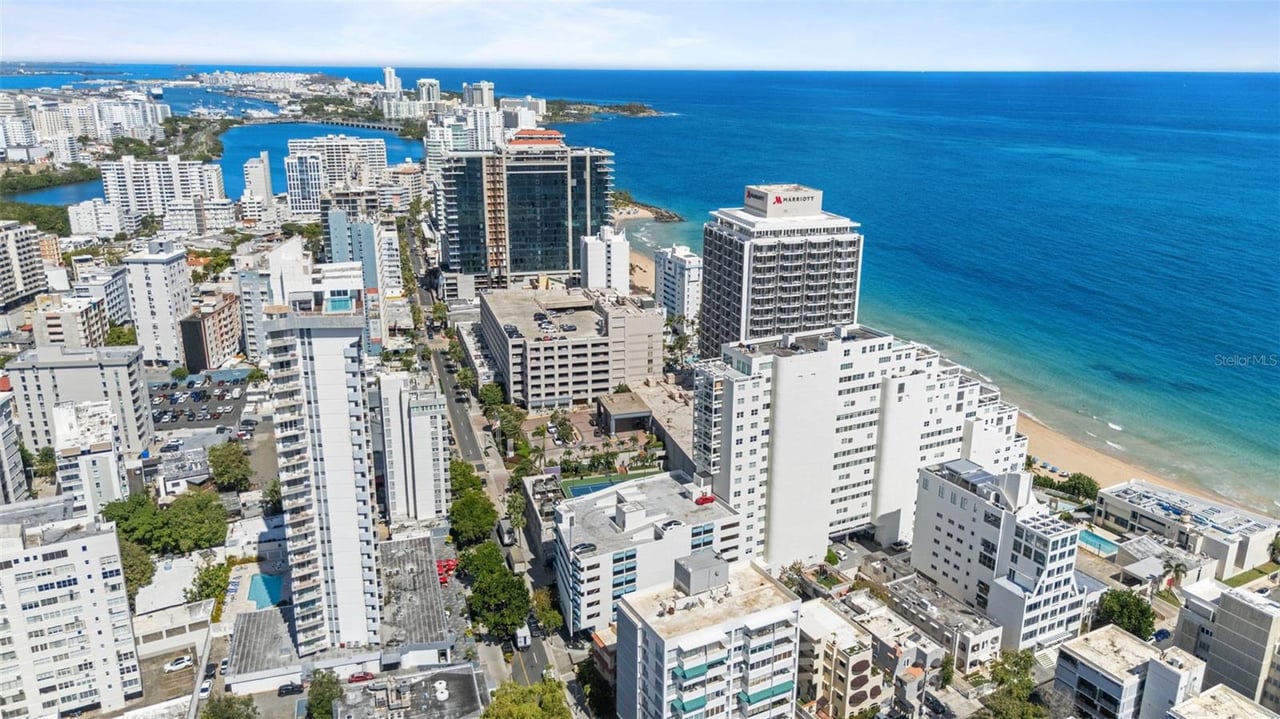
Condado · Buyer Guides · New Developments · Luxury Real Estate
How to Compare Pricing, Amenities, HOA Costs, Market Evidence and Long-Term Value Before Buying a Condo in Condado

Condado · New Developments · Luxury Real Estate · Buyer Guides
A Buyer’s Guide to 1120 Ashford Avenue, New Construction, Pricing and How The ICON Fits Into Condado’s Changing Luxury Market

Condado, New Developments, Luxury Real Estate, Buyer Guides
A Buyer’s Guide to Condado’s New Oceanfront Luxury Development, Amenities, Pricing and Market Position

MARKET ANALYSIS
60 Closed Sales, $73.9M in Volume — and a New Generation of Luxury Development Is Reshaping Condado
Puerto Rico Buying Guides
HOA structures, insurance, backup infrastructure, rental restrictions, resort privileges and comparable sales can matter as much as the view. Here’s what buyers should… Read more
We connect discerning buyers and sellers with the island’s most exclusive real estate opportunities. Our expertise and network ensure seamless transactions for both relocation under Act 60 and the sale of distinguished estates. We combine discretion, strategy, and global reach to represent your interests with excellence.