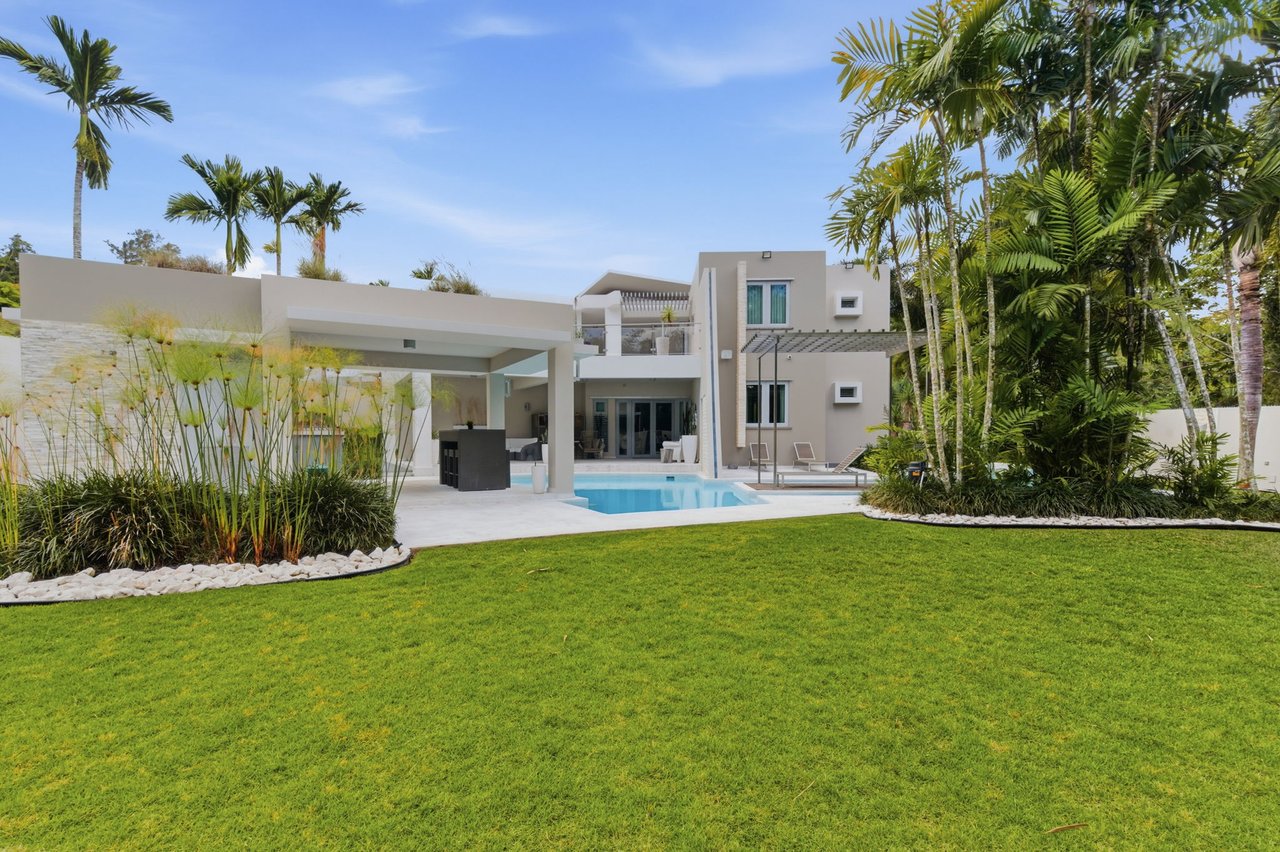
What Documents You Actually Need to Buy Property in Puerto Rico
Buying Process Lizvette Robles May 16, 2026
Buying Process Lizvette Robles May 16, 2026
Advisory, Due Diligence
The most consequential risks in a real estate transaction are rarely visible during a showing. They exist in the documentation, and in Puerto Rico, that distinction defines the outcome.
Buyers entering the Puerto Rico market naturally focus on what they can see: location, design, finishes, condition. These are the elements that generate interest. But legal ownership, insurance eligibility, and financing capacity are established by a different layer entirely, the one registered at the Registro de la Propiedad.
When these two realities, physical and documentary, fall out of alignment, the consequences are rarely small. Financing is denied. Insurance cannot be placed. Resale becomes complicated. In our experience, these issues surface most often not in distressed properties, but in assets that look, by every visual standard, like exceptional opportunities.
"In Puerto Rico, you are not buying what you see. You are buying what is documented, and those two things are not always the same."
Sophisticated buyers verify the following before committing capital. Each serves a distinct function; together, they constitute the legal foundation of the asset.
1. Estudio de Título Establishes legal ownership, identifies liens or encumbrances, and traces transaction history. This is the foundational document, no due diligence is complete without it.
2. Registro de la Propiedad The official registry record validating boundaries, legal description, and registered ownership. The registry reflects legal reality, not necessarily physical reality.
3. Escritura The legal instrument that transfers ownership and defines transaction terms. Must align precisely with registry data for the transaction to be enforceable.
4. Certificación CRIM Confirms property tax status and outstanding balances. In Puerto Rico, unpaid taxes can transfer with the property, making this a non-negotiable verification.
5. Permisos y Certificaciones de Uso Construction and occupancy permits confirming legal compliance. Critical for financing qualification and insurance placement, and often incomplete on otherwise excellent properties.
6. Plano de Mensura Defines boundaries, lot dimensions, and physical alignment with the registry. Particularly relevant in coastal, rural, and large estate properties where discrepancies are most common.
The most common, and costly, assumption buyers make is that what has been built has been permitted, and that what is permitted aligns with the registry. In Puerto Rico, neither can be assumed. Structures are added over decades; permits are not always obtained retroactively; registry descriptions lag behind physical improvements.
The consequences tend to compound: financing delays or outright denial, insurance placement complications on unpermitted structures, and reduced resale optionality when deficiencies are discovered by the next buyer instead of the current one.
The buyers who navigate this market most successfully treat documentation verification not as a formality, but as the first, and most important, phase of underwriting. They engage qualified professionals early, cross-reference physical structures against registry records, and resolve deficiencies before committing, not after.
This approach does not slow transactions. It accelerates them, by eliminating the discovery of issues at the stage where they are most disruptive.
What is the single most important document to verify? The title study and the Registro de la Propiedad record, reviewed in combination. They establish legal ownership and define what you are actually acquiring.
Are construction permits always in order on luxury properties? Not always. Market value and legal compliance are independent of each other. High-value properties can, and do, carry permit deficiencies that must be resolved prior to closing.
Does this process apply differently to coastal or large estate properties? Yes. Coastal properties carry additional regulatory considerations related to maritime zone boundaries. Large estate properties are more likely to have survey discrepancies. Both require additional layers of verification.
Who conducts this verification? A notary attorney handles title and registry review. Your advisory team coordinates permit, survey, and tax certification verification. Having experienced representation managing this process is necessary.
INVESTATE Puerto Rico guides buyers through every layer of due diligence, from title and registry verification to permit review and survey analysis, so that each acquisition decision is grounded in complete, validated information.
Because in Puerto Rico, what is written matters as much as what is built.
Stay up to date on the latest real estate trends.
Condado · Relocation · Buyer Guides · Puerto Rico Real Estate
What Buyers Should Know About Walkability, Schools, Healthcare, Condos, Transportation and Choosing the Right Property Before Moving to Condado

Act 13-2026 gives you a deadline to see the building rules. Act 157-2026 moves disputes out of DACO and into the courts.
Condado · Buyer Guides · Luxury Real Estate · Puerto Rico Real Estate
How Views, Exposure, Location, Noise, Walkability and Resale Position Differ Across Condado’s Two Waterfronts

Condado · Buyer Guides · Puerto Rico Real Estate · Luxury Real Estate
HOA Fees, Insurance, Property Taxes, Assessments and the Expenses Buyers Should Understand Before Purchasing in Condado

LUXURY COMMUNITIES
44 residences from $1.2M between Garden Hills and San Patricio. What $818 per square foot means if you are buying, and what it changes if you already own in the area.

LUXURY COMMUNITIES
Forty Stellar MLS closed sales across eight communities, from $136 to $3,110 per square foot, what sellers actually accept, and what the maintenance fee adds.
LUXURY COMMUNITIES
Condado and Isla Verde in San Juan, West Beach and Costa Dorada in Dorado, and Bahía Beach, Rio Mar and Coco Beach in Río Grande: closed-sale prices, buildings, fees a… Read more
Condado · Buyer Guides · New Developments · Luxury Real Estate
How to Compare Pricing, Amenities, HOA Costs, Market Evidence and Long-Term Value Before Buying a Condo in Condado

Condado · New Developments · Luxury Real Estate · Buyer Guides
A Buyer’s Guide to 1120 Ashford Avenue, New Construction, Pricing and How The ICON Fits Into Condado’s Changing Luxury Market
We connect discerning buyers and sellers with the island’s most exclusive real estate opportunities. Our expertise and network ensure seamless transactions for both relocation under Act 60 and the sale of distinguished estates. We combine discretion, strategy, and global reach to represent your interests with excellence.