Why People Who Moved to Puerto Rico for the Tax Break Ended Up Staying for the Life
Act 60 Relocation, Puerto Rico Real Estate, Luxury Real Estate, Buyers Guide Lizvette Robles June 23, 2026
Act 60 Relocation, Puerto Rico Real Estate, Luxury Real Estate, Buyers Guide Lizvette Robles June 23, 2026
There is a pattern that almost every Act 60 resident in Puerto Rico describes when asked why they are still here. The story begins the same way: they ran the numbers, engaged a tax attorney, modeled the capital gains savings, and made what was essentially a financial decision. They planned to satisfy the 183-day requirement, maintain their real life on the mainland, and treat Puerto Rico as an efficient structure rather than a genuine home.
Then something changed. For most of them, it changed in the first year.
This guide is about what that change actually is, not the promotional version of Puerto Rican life, but the specific, observable reasons why high-net-worth individuals who arrived for the tax break have built their primary lives here, sent their children to local schools, deepened their friendships with neighbors, and found that the island they once approached as a compliance exercise has become the place they most want to be.
The Tax Math Got Them Here
To understand why people stay, it helps to understand clearly why they came, because the financial case for Act 60, particularly for applications submitted before the December 31, 2026 deadline, is genuinely transformational.
One consulting business owner who relocated in 2024 described watching his effective tax rate drop from approximately 45 percent to under 10 percent, describing the outcome as life-changing capital that could be reinvested into the business rather than transferred to the government. A real estate investor who relocated in 2023 cut an annual federal income tax bill of more than $400,000 to approximately $40,000 by establishing Puerto Rico residency and maintaining his mainland business operations remotely. An investor who sold long-term stock holdings after establishing San Juan residency described saving approximately $140,000 on a single transaction, capital gains that would have been taxed at the combined federal and state rate in Illinois, paid at zero percent in Puerto Rico.
These are not exceptional outcomes. They are representative of what Act 60 delivers to the buyer profile it was designed to serve, investors, founders, and capital allocators who have spent careers building positions that would eventually be taxed at rates that Puerto Rico simply does not apply to post-residency appreciation. Between 2021 and 2022 alone, approximately 27,000 people relocated to Puerto Rico, many of them drawn by precisely this calculation. The tax math is real, and it is as significant as its proponents claim.
What the Tax Math Cannot Predict
What the tax math cannot predict is what happens when the numbers are no longer the most interesting part of the decision.
Most Act 60 residents describe a transition that occurs somewhere in the first six to eighteen months, a point at which the compliance calendar fades into background noise and the experience of daily life in Puerto Rico moves to the foreground. The moment they realize they are not counting days toward 183 but rather arranging their mainland trips around how much they do not want to leave. The morning they walk to the beach before a call and think, not for the first time, that this is a version of their life they could not have engineered anywhere else.
This transition is not universal, there are Act 60 residents who maintain their primary life on the mainland, satisfy the minimum requirements, and never develop a genuine connection to the island. They exist, and the IRS is increasingly aware of them. But they are not the majority of the community that InvEstate Puerto Rico works with, and they are not the residents who shape the social and professional ecosystem that makes Puerto Rico's Act 60 community worth joining.
The residents who stay are the ones who arrived for the tax break and found the life.
What They Found
The most consistent description of what Act 60 residents discover about Puerto Rico, the thing that almost no pre-move research captures, is time. Not leisure, specifically, but time in the most fundamental sense: the restoration of discretionary time that urban mainland professional life consumes with a relentlessness that most high-achievers have stopped noticing until it is suddenly absent.
The absence of a daily commute, measured not in minutes but in the cumulative hours of a professional life spent in transit, is described by almost every relocator as an immediate and disproportionate quality-of-life improvement. The morning that begins with a beach walk instead of a crowded train is not simply more pleasant. It produces a different kind of person by midday, more present, more focused, less depleted by the friction of a city that requires constant navigation.
The warmth is structural in a way that mainland residents do not fully anticipate. Puerto Rico's year-round tropical climate does not simply mean that outdoor activities are available, it means that outdoor activities become the default rather than the exception. Social life migrates outside. Evenings happen on terraces rather than in indoor restaurants chosen because they are heated. Morning exercise is not a logistical achievement but a natural extension of waking up. The cumulative effect of this shift, of a life organized around outdoor access rather than around indoor refuge from weather, is something that most Act 60 residents describe as one of the most significant quality-of-life changes they did not anticipate.
The community compounds this effect. The concentration of Act 60 residents in Dorado Beach and Condado, founders, investors, fund managers, and entrepreneurs who have all made versions of the same decision, creates a social world that is unusually aligned in its values and its relationship to time. These are not neighbors who are counting down to retirement. They are people who have already restructured their professional lives to create the conditions for a different kind of living, and who are doing it together in a relatively small geographic space. The density of interesting people in a small place is one of Puerto Rico's most underrated advantages, and it is something that only becomes visible after you are living inside it.
The Island Itself
Beyond the community and the climate and the restored time, there is Puerto Rico itself, a place of genuine and specific beauty that rewards long-term residence in ways that a vacation never reveals.
Old San Juan, which visitors experience as a charming colonial city, becomes something richer for residents: a city with layers of history that open slowly, a cultural scene that is genuinely Puerto Rican rather than constructed for tourism, restaurants and bars that serve a local population rather than a transient one. The bioluminescent bays, El Yunque rainforest, the beaches of Culebra and Vieques, the fishing villages of the west coast near Cabo Rojo, these are not attractions to be checked off a list. They are the ongoing texture of a life lived on an island with unusual geographic diversity packed into a relatively small space.
Residents describe the experience of knowing a place, of having a neighborhood coffee shop where the staff knows their order, of a beach that feels like theirs in the early morning before other people arrive, of the accumulated social knowledge of who lives on which street and where the best plantains are sold on Saturday morning, as the experience that turns a residence into a home. Puerto Rico becomes a home for its Act 60 residents faster than most of them expected, and more completely than any of them predicted based on their pre-move research.
The Honest Accounting
The honest accounting of why people who moved to Puerto Rico for the tax break ended up staying for the life is not a single answer. It is a combination of factors that interact in ways that are genuinely difficult to model in advance.
The financial case brought them. The climate kept them comfortable. The restored time showed them what their lives could feel like at a different pace. The community gave them people worth staying for. The island itself gave them a place worth belonging to. And the tax break, which was supposed to be the whole point, became the least interesting part of the story within the first year of living it.
For buyers who are evaluating Puerto Rico as a financial decision and wondering whether it will also make sense as a life: the evidence from the community that has already made this move is consistent. The people who arrive with the numbers and stay for the life are not the exception. They are the pattern.
At InvEstate Puerto Rico, we have watched this pattern play out for our clients across every market we serve, Dorado, Condado, Guaynabo, Old San Juan, and Cabo Rojo. If you are at the beginning of that calculation and want to understand what comes after the numbers, contact us. We know what this life looks like from the inside, and we are glad to share it.
Frequently Asked Questions
Do most Act 60 residents actually stay in Puerto Rico beyond the minimum 183 days?
Many do, and not simply to satisfy compliance requirements. A significant portion of Act 60 residents who arrived with minimal lifestyle expectations find that their primary life migrates to Puerto Rico within the first one to two years. The combination of climate, community, restored time, and the quality of daily life in Dorado and Condado consistently exceeds the expectations of buyers who approached the move primarily as a financial decision.
What do Act 60 residents say they value most about living in Puerto Rico?
The most consistently cited benefits are not the tax savings, which are real and significant, but the restoration of discretionary time, year-round access to outdoor life, the quality of the community of other relocated entrepreneurs and investors, and the experience of belonging to a place with genuine cultural depth and natural beauty. Most residents describe these as the factors that determined whether they stayed, rather than the financial structure that brought them.
Is Puerto Rico a good place to live beyond the tax incentives?
Yes, on its own terms. Puerto Rico offers year-round tropical climate, over 270 miles of coastline, UNESCO-recognized colonial architecture in Old San Juan, Michelin Guide-recognized dining, strong private school infrastructure in Dorado and Guaynabo, and direct flights to major U.S. cities in two to three hours. For residents who engage fully with the island rather than treating it as a compliance address, Puerto Rico provides a quality of life that is difficult to find at any price point on the U.S. mainland.
What is the social community like for Act 60 residents in Puerto Rico?
The Act 60 community in Puerto Rico, concentrated primarily in Dorado Beach and Condado, includes founders, fund managers, investors, cryptocurrency holders, and entrepreneurs who have all made versions of the same relocation decision. The density of this community in a small geographic area creates ongoing professional and social interaction that most residents describe as one of the most valuable and unexpected aspects of Puerto Rican life. The community is at its largest and most developed point in 2026.
How long does it take to feel at home in Puerto Rico as an Act 60 resident?
Most Act 60 residents describe feeling genuinely at home within six to eighteen months, faster than they anticipated. The combination of a warm climate that pushes social life outdoors, a concentrated community of neighbors with similar backgrounds and values, and the accumulated daily familiarity of knowing a place in specific ways all contribute to a sense of belonging that develops more quickly than it did in larger mainland cities.
Is the Act 60 lifestyle sustainable long term?
For the right buyer, one who has established genuine bona fide residency, maintains proper compliance documentation, and has built a real life in Puerto Rico rather than a paper one, yes, absolutely. Act 60 decrees obtained before December 31, 2026 are grandfathered through 2035, and the program itself has been extended through 2055 under Act 38-2026. The residents who built genuine lives here are the ones positioned to benefit from the program's full duration while enjoying the quality of life that Puerto Rico delivers on its own terms.
More on this: our full guide to Act 60 real estate in Puerto Rico — where Act 60 families actually buy, what they buy, and how the purchase works.
Stay up to date on the latest real estate trends.
Condado · Relocation · Buyer Guides · Puerto Rico Real Estate
What Buyers Should Know About Walkability, Schools, Healthcare, Condos, Transportation and Choosing the Right Property Before Moving to Condado
Act 13-2026 gives you a deadline to see the building rules. Act 157-2026 moves disputes out of DACO and into the courts.
Condado · Buyer Guides · Luxury Real Estate · Puerto Rico Real Estate
How Views, Exposure, Location, Noise, Walkability and Resale Position Differ Across Condado’s Two Waterfronts
Condado · Buyer Guides · Puerto Rico Real Estate · Luxury Real Estate
HOA Fees, Insurance, Property Taxes, Assessments and the Expenses Buyers Should Understand Before Purchasing in Condado

LUXURY COMMUNITIES
44 residences from $1.2M between Garden Hills and San Patricio. What $818 per square foot means if you are buying, and what it changes if you already own in the area.
LUXURY COMMUNITIES
Forty Stellar MLS closed sales across eight communities, from $136 to $3,110 per square foot, what sellers actually accept, and what the maintenance fee adds.
LUXURY COMMUNITIES
Condado and Isla Verde in San Juan, West Beach and Costa Dorada in Dorado, and Bahía Beach, Rio Mar and Coco Beach in Río Grande: closed-sale prices, buildings, fees a… Read more
Condado · Buyer Guides · New Developments · Luxury Real Estate
How to Compare Pricing, Amenities, HOA Costs, Market Evidence and Long-Term Value Before Buying a Condo in Condado
Condado · New Developments · Luxury Real Estate · Buyer Guides
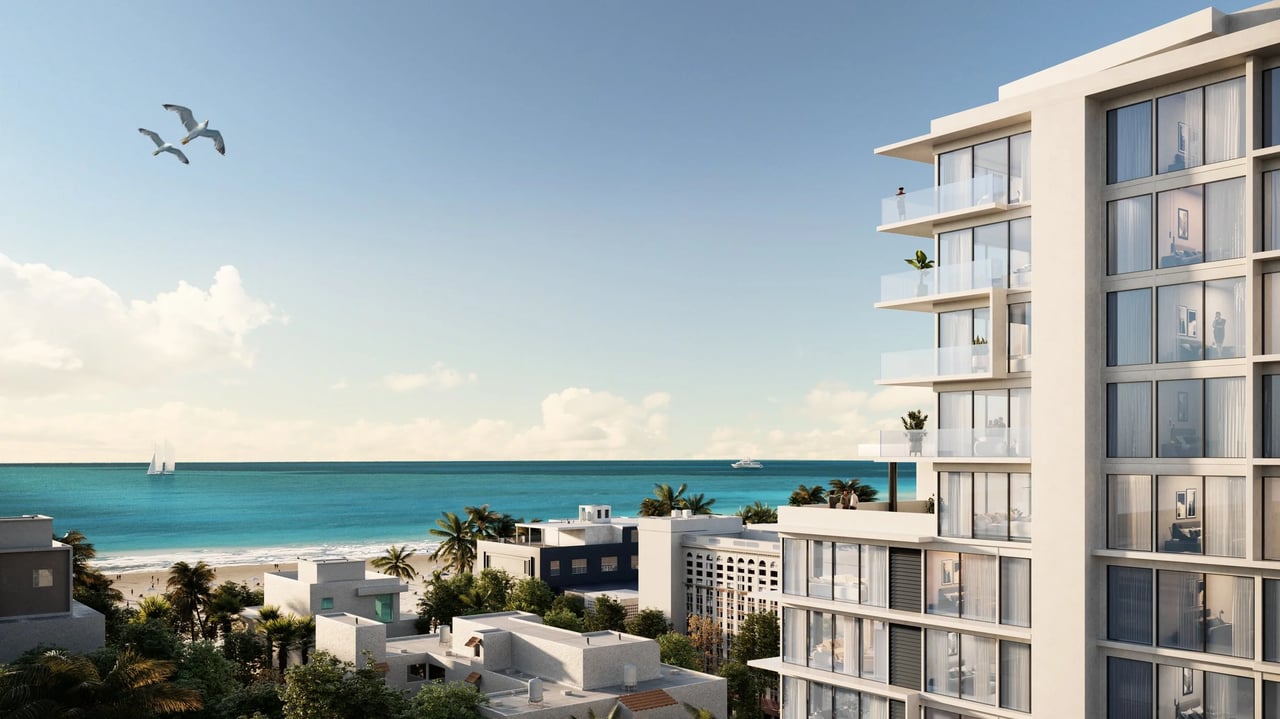
A Buyer’s Guide to 1120 Ashford Avenue, New Construction, Pricing and How The ICON Fits Into Condado’s Changing Luxury Market
We connect discerning buyers and sellers with the island’s most exclusive real estate opportunities. Our expertise and network ensure seamless transactions for both relocation under Act 60 and the sale of distinguished estates. We combine discretion, strategy, and global reach to represent your interests with excellence.