
Puerto Rico vs US Virgin Islands: Where High-Net-Worth Buyers Are Actually Choosing to Relocate
Act 60, Buyers Guide, Market Comparison, Puerto Rico Real Estate Lizvette Robles June 5, 2026
Act 60, Buyers Guide, Market Comparison, Puerto Rico Real Estate Lizvette Robles June 5, 2026
When high-net-worth individuals begin exploring Caribbean relocation for tax optimization, two U.S. territories consistently come up in the same conversation: Puerto Rico and the U.S. Virgin Islands. Both are U.S. territories. Both offer significant tax incentive programs. Both allow U.S. citizens to relocate without a passport, visa, or foreign bank account. And both have produced genuine, documented tax savings for qualified residents.
But they are very different places, in scale, in lifestyle, in real estate depth, and in how their respective tax programs are structured. This guide provides an honest, side-by-side comparison for buyers who are genuinely evaluating both. The Tax Incentive Framework: Two Different Architectures
Puerto Rico's tax incentive program operates under Act 60, the Puerto Rico Incentives Code enacted in 2019. Act 60 consolidated several previous laws, including Act 20 for export services businesses and Act 22 for individual investors, into a single unified framework. There are two primary chapters relevant to relocators: Chapter 2 for individual investors, which targets passive income including capital gains, dividends, and interest; and Chapter 3 for export services businesses, which offers a flat 4 percent corporate tax rate on eligible business income from clients outside Puerto Rico. BILT Group
The U.S. Virgin Islands operates under a different legal structure entirely. The USVI uses a mirror system of taxation known as the mirror code, under which all U.S. tax laws are mirrored to the USVI, with the U.S. Congress having granted the USVI authority to allow a lowered tax rate to bona fide residents. The primary incentive vehicle is the Economic Development Commission program, known as the EDC, administered by the USVI Economic Development Authority. BILT Group
Benefits under the EDC program include a credit equal to 90 percent of applicable income tax, which applies both to income from the benefited business and to USVI bona fide resident owners on their allocations or dividends. In effect, approved EDC participants can reduce their combined corporate and personal tax burden to roughly 3.5 percent on eligible income, a headline number that is even lower than Puerto Rico's 4 percent corporate rate. Chambers and Partners
However, the USVI incentives are largely geared toward businesses that would hire USVI residents and make a meaningful economic impact in the territory. Fewer people can take advantage of them, but for the right person with a larger company, they can slash both corporate and personal taxation to nearly zero. Schiff Sovereign Accessibility: Who Actually Qualifies This is where the two programs diverge most sharply in practice.
Puerto Rico's Act 60 Individual Investor decree, Chapter 2, is accessible to a broad range of high-net-worth individuals: investors, crypto traders, fund managers, and anyone whose income is driven by capital gains, dividends, and interest. The application process runs through the DDEC, and most applicants receive their decree within three to six months of submission through the DDEC's Single Business Portal. Investatepr
The USVI's EDC program is more selectively granted. The application process requires the submission of a detailed application including the beneficiary's ownership, financial information, and a background check for beneficial owners, followed by a public hearing before the EDC commissioners. The program is better suited to established businesses with proven revenue, local hiring capacity, and the ability to demonstrate measurable economic impact in the territory. This factor can greatly narrow the class of companies that can succeed in the USVI, and makes it challenging for startups or early-stage businesses to launch from there. Chambers and PartnersBILT Group
For individual investors without a qualifying business structure, Puerto Rico's Act 60 Individual decree is the more accessible pathway. For business owners with established enterprises and the ability to staff locally, the USVI's EDC may offer superior economics, but with considerably more friction in the application and compliance process. Decree Duration and Program Stability
EDC benefits in the USVI are available for initial periods of 20 years on St. Thomas and St. John, and 30 years on St. Croix, with extension options available upon compliance review. Chambers and Partners
Puerto Rico's Act 60 decrees are typically granted for 15 years, with extension options. Act 38-2026 extended the Individual Resident Investor program through December 31, 2055, providing long-term planning certainty for both current and future applicants. DLA Piper Both programs offer contractual certainty, the decree or certificate functions as a binding agreement between the beneficiary and the territorial government, providing protection against unilateral changes to the terms once granted.
The 2026 Act 60 Deadline, A Factor Unique to Puerto Rico For buyers comparing the two territories right now, there is a time-sensitive element specific to Puerto Rico. Investors who apply for and obtain their Act 60 Individual Investor decree on or before December 31, 2026 retain the current 0 percent tax rate structure on qualifying capital gains. Applications filed after that date will be subject to a 4 percent rate under Act 38-2026. The USVI does not have an equivalent deadline pressure at this time. DLA Piper
For buyers who have been comparing both destinations and have not yet committed, the December 2026 cutoff is a relevant factor in the timing calculus. Scale, Infrastructure, and Lifestyle Puerto Rico is a much larger island than the USVI, with a population of over 3 million compared to the USVI's approximately 90,000. Puerto Rico has its own culture and is a much more urban, metropolitan lifestyle by comparison. BILT Group
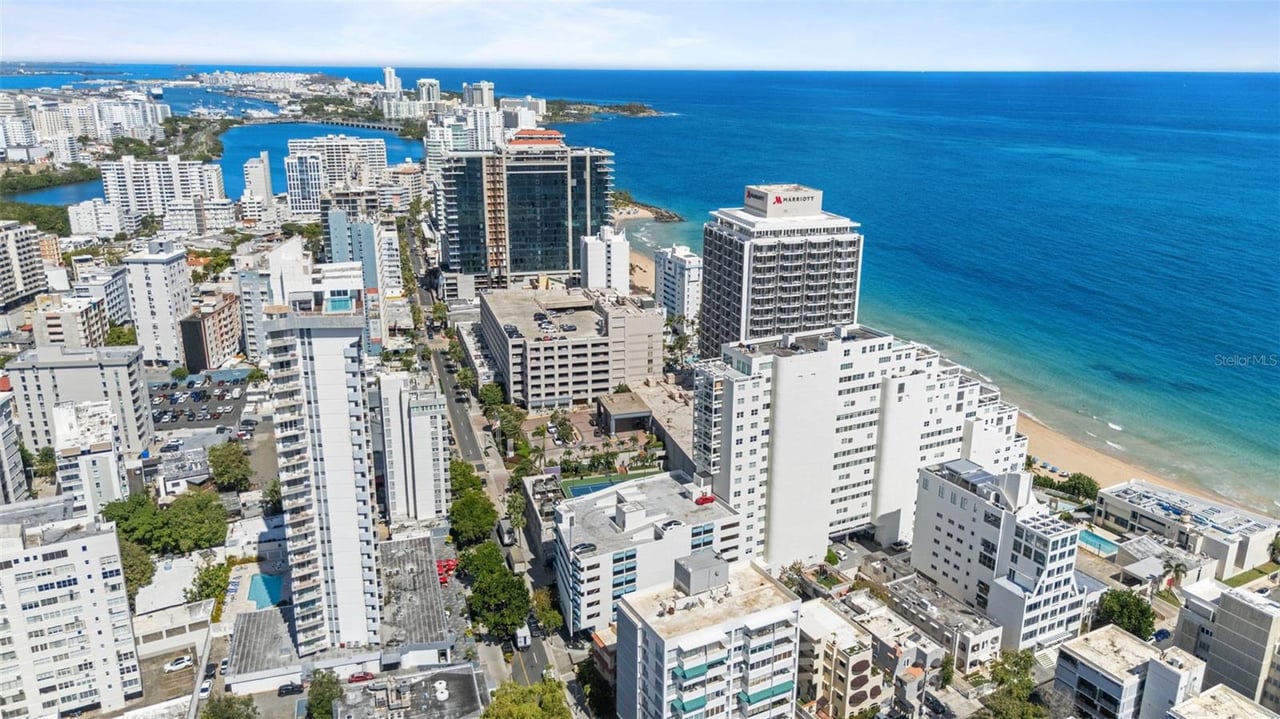
That distinction matters enormously for buyers evaluating long-term quality of life. Puerto Rico offers major hospitals, international airports with direct flights to dozens of U.S. cities and global destinations, a full-service private and public school infrastructure, an established luxury real estate market with genuine depth and liquidity, and a social ecosystem built for high-net-worth residents and families. Communities like Dorado Beach, Condado, and Guaynabo have developed into mature luxury markets with world-class amenities, resort communities, and professional services networks.
Puerto Rico's luxury real estate market has reached a new level in 2026, with high-end properties, particularly in Dorado Beach and select coastal enclaves, appreciating at a pace that rivals markets like Miami, the Hamptons, and Malibu.
The USVI, particularly St. Thomas, St. John, and St. Croix, offers a starkly different lifestyle: smaller, quieter, more remote. For buyers who prioritize privacy, natural beauty, and a genuinely island pace of life, the USVI has real appeal. For buyers who need business infrastructure, school options, medical access, or a larger community of peers, Puerto Rico's scale is a meaningful advantage.
Real Estate Market Depth Puerto Rico's real estate market has the inventory breadth, the professional services ecosystem, and the transaction volume to support a serious luxury buyer. From Dorado Beach oceanfront estates to Condado penthouses to Old San Juan colonial mansions, the market offers multiple asset classes at multiple price points with established comparables and liquidity.
The USVI luxury real estate market is smaller and more limited. Inventory in St. John and the private island enclaves can offer extraordinary properties, but with limited comparables, thinner transaction volume, and fewer professional services on the ground. Buyers used to the infrastructure of a mature market may find the process more demanding.
Which Destination Is Right for Whom There is no universal answer, the right choice depends on the buyer's income profile, business structure, lifestyle priorities, and family situation.
Puerto Rico tends to be the stronger fit for individual investors whose income is driven by capital gains, dividends, or interest; entrepreneurs with export services businesses who want urban infrastructure alongside their tax incentive; families with school-age children who need established educational options; buyers who want genuine real estate market depth, liquidity, and appreciation potential; and anyone who values scale, connectivity, and access to a larger professional and social ecosystem.
The USVI tends to be more compelling for established businesses with the revenue, staffing capacity, and compliance infrastructure to qualify for the EDC program; buyers who genuinely prioritize a smaller, quieter island lifestyle over metropolitan amenities; and individuals for whom the 90 percent tax reduction structure under EDC, even with its higher bar to entry, is the optimal financial outcome.
For many buyers who come to us having considered both, Puerto Rico is the practical choice, not by default, but by deliberate analysis of what each territory actually delivers for their specific situation.
At InvEstate Puerto Rico, we have worked with Act 60 relocators from across the United States and internationally, and we understand the full picture that informs this decision. If you are comparing Puerto Rico and the USVI and want a grounded, honest conversation about what relocation actually looks like on both sides, contact us. We are here to help you think through it clearly, not to sell you on a destination.
Frequently Asked Questions What is the main difference between Puerto Rico Act 60 and the USVI EDC program?
Act 60 in Puerto Rico offers individual investors a 0 percent tax rate on qualifying capital gains, dividends, and interest accrued after establishing residency, and a 4 percent corporate rate for export service businesses. The USVI's EDC program provides a 90 percent tax credit on eligible corporate and personal income tax for approved businesses, resulting in an effective rate of approximately 3.5 percent. The USVI program is more selective and requires demonstrated business substance and local hiring.
Is Puerto Rico or the USVI better for individual investors with capital gains? For individual investors whose income comes primarily from capital gains, dividends, and interest, rather than active business income, Puerto Rico's Act 60 Individual Investor decree is generally more accessible and better suited to their profile. The USVI EDC program is primarily a business-focused incentive.
Is there a deadline to apply for Puerto Rico Act 60 in 2026? Yes. Individual Investor decree applications filed on or before December 31, 2026 qualify for the 0 percent rate on qualifying capital gains, dividends, and interest. Applications filed after that date will be subject to a 4 percent rate under Act 38-2026. The USVI does not have an equivalent deadline at this time.
Which territory has a better real estate market, Puerto Rico or the USVI? Puerto Rico offers significantly greater real estate market depth, inventory breadth, transaction volume, and liquidity. Markets like Dorado Beach, Condado, and Guaynabo have matured into internationally recognized luxury destinations with established comparables and appreciation trends. The USVI has extraordinary properties, particularly in St. John, but the market is smaller, thinner in transaction volume, and less supported by professional services infrastructure.
Can you hold tax incentive decrees in both Puerto Rico and the USVI simultaneously? No. Both programs require bona fide residency in the respective territory as a threshold condition, and you can only be a bona fide resident of one at a time. Attempting to claim benefits in both simultaneously is not viable and would attract scrutiny from both territorial and federal tax authorities.
Which territory is better for families with children? Puerto Rico's scale and infrastructure, including established private schools, international hospitals, and a large expatriate community, generally make it more practical for families with school-age children and complex lifestyle needs. The USVI's smaller scale and more limited institutional infrastructure is better suited to buyers for whom simplicity and privacy are the primary lifestyle priorities.
How long does the USVI EDC program run?
EDC benefits are granted for initial periods of 20 years on St. Thomas and St. John, and 30 years on St. Croix, with extension options available upon compliance review. Puerto Rico's Act 60 decrees run for 15 years with extension options, and the overall program has been extended through 2055 under Act 38-2026.
What kind of buyer chooses the USVI over Puerto Rico? Typically, established business owners with qualifying revenue, the capacity to hire locally in the USVI, and a strong preference for a smaller, quieter island lifestyle. The EDC program's economics can be superior for the right profile, but the access bar is higher, the lifestyle is more remote, and the real estate market is thinner.
Work With Advisors Who Know the Difference Choosing between Puerto Rico and the USVI is not a tax question alone, it is a life decision. At InvEstate Puerto Rico, we specialize in helping high-net-worth buyers handle the Puerto Rico side of this equation with clarity and precision, from Act 60 compliance requirements to property selection in the island's most strategic luxury markets.
If you are in the evaluation stage and want a direct, informed perspective on what Puerto Rico can deliver for your situation, contact us. The right conversation at the start can save years of course correction later.
Related: where Act 60 buyers actually buy in Puerto Rico, and how a purchase here differs from one on the mainland.
Stay up to date on the latest real estate trends.

Condado · Relocation · Buyer Guides · Puerto Rico Real Estate
What Buyers Should Know About Walkability, Schools, Healthcare, Condos, Transportation and Choosing the Right Property Before Moving to Condado

Act 13-2026 gives you a deadline to see the building rules. Act 157-2026 moves disputes out of DACO and into the courts.

Condado · Buyer Guides · Luxury Real Estate · Puerto Rico Real Estate
How Views, Exposure, Location, Noise, Walkability and Resale Position Differ Across Condado’s Two Waterfronts

Condado · Buyer Guides · Puerto Rico Real Estate · Luxury Real Estate
HOA Fees, Insurance, Property Taxes, Assessments and the Expenses Buyers Should Understand Before Purchasing in Condado

LUXURY COMMUNITIES
44 residences from $1.2M between Garden Hills and San Patricio. What $818 per square foot means if you are buying, and what it changes if you already own in the area.

LUXURY COMMUNITIES
Forty Stellar MLS closed sales across eight communities, from $136 to $3,110 per square foot, what sellers actually accept, and what the maintenance fee adds.

LUXURY COMMUNITIES
Condado and Isla Verde in San Juan, West Beach and Costa Dorada in Dorado, and Bahía Beach, Rio Mar and Coco Beach in Río Grande: closed-sale prices, buildings, fees a… Read more
Condado · Buyer Guides · New Developments · Luxury Real Estate
How to Compare Pricing, Amenities, HOA Costs, Market Evidence and Long-Term Value Before Buying a Condo in Condado

Condado · New Developments · Luxury Real Estate · Buyer Guides
A Buyer’s Guide to 1120 Ashford Avenue, New Construction, Pricing and How The ICON Fits Into Condado’s Changing Luxury Market
We connect discerning buyers and sellers with the island’s most exclusive real estate opportunities. Our expertise and network ensure seamless transactions for both relocation under Act 60 and the sale of distinguished estates. We combine discretion, strategy, and global reach to represent your interests with excellence.